
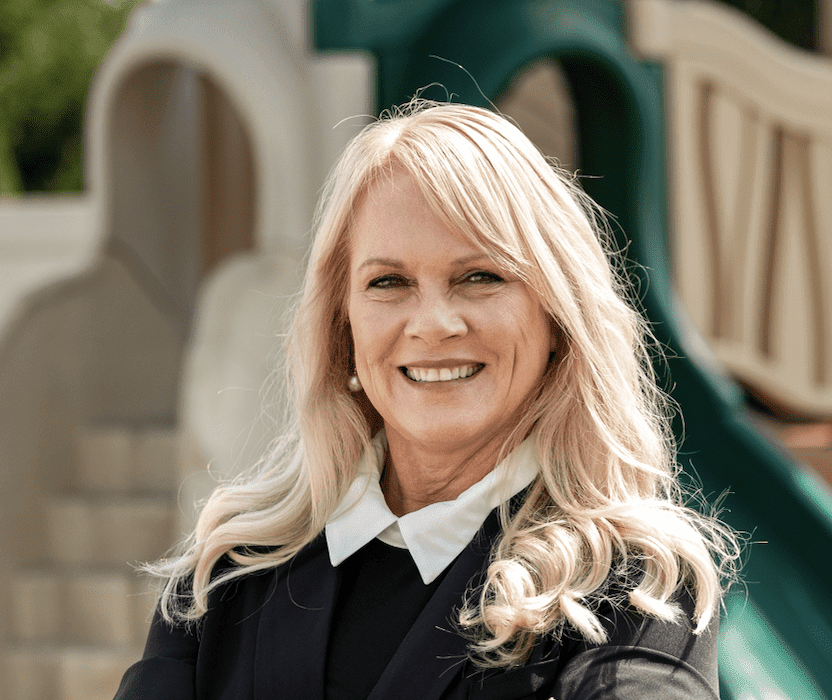

Gigi Schweikert’s leadership story shows how resilient organizations are built through relationships; shared purpose; and open communication. As CEO of Lightbridge Academy Franchise Company she connects franchisees; educators; families; and support teams around a Circle of Care. This interview offers practical lessons for leaders who want trust to travel across a growing network.
• CEO of Lightbridge Academy Franchise Company, educational child care, 100+ programs in operation or development
• Keynote speaker on education, leadership, parenting, and work/life
• Author of 18 books, in three languages
• Assessed and implemented work/life initiatives and benefits for Fortune 500 companies
• Developed and operated employer-sponsored child care centers
• Create and deliver leadership training for Fortune 500 companies and Educational Institutions
• Clients included Merck, Prudential, Chesapeake Energy, Purdue University, Bright Horizons
During her thirty years of experience, Gigi directed the United Nations Early Childhood Program in New York City and developed the Johnson & Johnson System of Family Centers. Gigi is CEO of Lightbridge Franchise Company. Gigi also hosted the television show, “Today’s Family.” Gigi has four children, one in Los Angeles, one in Seattle, and two in Boulder.
Company: Lightbridge Academy
We are thrilled to have you join us today, welcome to ValiantCEO Magazine’s exclusive interview! Let’s start off with a little introduction. Tell our readers a bit about yourself and your company.
Gigi Schweikert: I’m Gigi Schweikert, and for over 35 years, I’ve dedicated my life to early childhood education. From the classroom to leadership, I’ve worked in just about every role imaginable—parent, director, consultant, author, and speaker. My passion has always been helping children thrive, supporting educators, and building strong partnerships with families.
Today, I serve as the CEO of Lightbridge Academy, a leading early childhood education franchise that I’m proud to be part of. Our unique Circle of Care philosophy ensures that children, parents, staff, and franchise owners all feel supported and connected. We’re not just providing childcare; we’re creating a community where learning, care, and leadership come together every day.
I’ve also written over a dozen books and countless articles for business owners, educators and parents, sharing practical guidance and encouragement. My goal has always been to elevate the field of early childhood education and empower those who work within it.
Whether I’m speaking at a conference, walking through a Lightbridge Academy center, or mentoring leaders, my goal is the same: to inspire excellence in the care and education of young children.
Can you share a time when your business faced a significant challenge? How did you navigate through it?
Gigi Schweikert: Absolutely. One of the most defining challenges we ever faced at Lightbridge Academy was during the Covid-19 pandemic. It wasn’t just a public health crisis, it was a moment that exposed the critical role of early childhood education in our society.
Before the pandemic, many people took child care for granted. But it wasn’t until everything shut down that we collectively recognized two important truths. First, child care is essential. No one, across any industry, could go to work without a safe and trusted place for their children. We saw more women leave the workforce during that time than ever before so that they could take care of their children. That told us loud and clear: child care is not a luxury, it’s absolutely essential. It’s foundational to a healthy economy.
Second, we began seeing the impact of isolation on young children. Studies from Brown University showed a significant decline in the social and cognitive development for children that were kept at home or born during the pandemic. That validated what we’ve always believed at Lightbridge Academy: early actions of socialization are essential to a child’s development and can be built through social interaction and playtime with other children. Through play, peer interaction, and guided learning, children develop the cognitive and emotional tools they’ll carry for a lifetime.
Navigating that time meant making hard decisions, and fast. We had to adapt operations rapidly by implementing health and safety protocols, supporting our franchisees, and most importantly, staying open for the essential workers who relied on us. As a leader, I had to keep my team focused, communicate often, and remind everyone that we weren’t just running a business. We were providing stability for families, opportunity for children, and support for an economy in crisis.
How has a failure or apparent failure set you up for later success?
Gigi Schweikert: While I wouldn’t categorize it as a failure, I think one of the most pivotal moments in my career came before it even began – when I realized I was pursuing a path that wasn’t truly mine.
I went to school to become a pediatric dentist, not because it was my passion, but because I loved children and my parents, though well-meaning, discouraged me to become a teacher because they wanted me to be even more successful than they had been in their careers.
But the truth was, early education had always been my calling.
So in a way, what might seem like a failure, choosing the wrong path at the start, turned out to be one of the greatest gifts. I eventually walked away from dentistry and into the world of early childhood education, starting in classrooms, supporting parents through backup care programs, directing the United Nations Child Care Center, and eventually owning and operating my own center.
That false start ultimately brought me to where I am today: leading educational child care franchise system. The most important lesson learned from the start of my career is how important it is to encourage and mentor other women. Too few receive the necessary mentoring to recognize that they can achieve greatness. I’ve always believed that if you follow your passion, the money will follow. It’s also important to believe in yourself, even more than others do. Even my parents didn’t understand that teaching was so important to me and a passion for me. Because I followed my passion, I get to wake up and love what I do every day.
How do you build a resilient team? What qualities do you look for in your team members?
Gigi Schweikert: Building a resilient team begins with building relationships. This means creating a culture where people feel seen and supported, as well as being held accountable. At Lightbridge Academy, we don’t just talk about being a Circle of Care, we live it every day. That includes our franchisees, center directors, teachers, and support teams. To be resilient, a team needs a foundation of trust, mentorship, and shared purpose.
When I’m building a team, I look for passion and purpose, especially in early childhood education. We’re shaping children’s futures, and that takes more than skill – it takes heart. I want team members who are genuinely passionate about working with kids and who see their work as meaningful and impactful.
Finally, a willingness to learn is essential. No one needs to know everything, but you do need to know how to access that information, ask the right questions, and support others in doing the same. It is important to remain curious and resourceful. Whether it’s understanding licensing, operations, or accreditation, great team members know how to access what they need and help others do the same. That mindset creates a team that adapts, evolves, and supports one another through hard times.
How do you maintain your personal resilience during tough times?
Gigi Schweikert: Resilience doesn’t just happen; it’s continuously built, moment by moment, especially during the toughest times. For me, it starts with remembering why I do this work.
At Lightbridge Academy, we don’t just run centers; we support working families and create environments where children can thrive. When challenges hit, I go back to that purpose. It re-centers me.
Additionally, I surround myself with people who tell me the truth, encourage me, and challenge me to be a better leader, even when it’s uncomfortable. Leadership carries weight, and no one is meant to carry it alone. The people around me, whether it’s my executive team, close colleagues, mentors, or friends, help me stay grounded when things feel uncertain. They remind me of who I am, what I stand for, and that I don’t have to have all the answers every moment of the day.
What strategies do you use to manage stress and maintain focus during a crisis?
Gigi Schweikert: While running any business, but especially a childcare franchise, you will often find yourself being pulled in many different directions at any moment. Whenever I start to feel myself getting overwhelmed, the first thing I do is pause and prioritize. I’ve learned to quickly assess what truly matters in the moment; what needs my direct attention, and what can be delegated to capable team members. That clarity helps me stay grounded and focused, even in high-pressure situations.
Delegating to your team not only lightens your bandwidth, but proves to your team members that their resilience is seen and appreciated. I surround myself with a group of talented and trusted people that I can easily rely on in crisis. That not only helps me manage stress, but it also builds confidence in the organization, from the top-down.
And finally, I try to stay connected to our greater mission. In early childhood education, we don’t only care about operational margins, we’re supporting families and shaping futures. Staying connected to this truth revives my passion and reminds me that the work we do matters and it is all worth it.
How do you communicate with your team during a crisis?
Gigi Schweikert: In times of crisis (and always), I find it crucial to maintain a clear line of communication between all levels of an organization. Transparency builds trust, and in uncertain moments, trust is your foundation. I begin by gathering accurate information quickly and relaying it in clear, honest messages. Then I connect with my leadership team to align on key priorities and ensure we’re cascading consistent communication across every center and department.
I always make space to listen, whether that’s a call with franchisees, a town hall with center directors, or a personal message to a team member who’s worried. Crisis doesn’t just test your systems, it reveals your culture. And communication is what keeps that culture intact.
What advice would you give to other CEOs on building resilience in their organizations?
Gigi Schweikert: The most resilient brands view their entire network as co-creators for solutions in order to transform frontline insights into systemwide innovation. I prioritize showing employees, no matter what their position is, that they are valued because of the passion they contribute to the brand. It is important to create processes that prioritize mind-sharing across all levels of an organization, leveraging experience from each level. In today’s climate, agility isn’t about reacting faster than others, it’s about evolving intelligently, with speed, and purpose. It is about creating systems around and anticipating market change, rather than reacting to it.
How do you prepare your business for potential future crises?
Gigi Schweikert: Preparation should start before a crisis ever hits, I believe it’s important to be proactive rather than reactionary. Whether it’s health and safety protocols, operational contingencies, or communication strategies, having clear systems in place helps everyone know their role and know what to do, if the unexpected happens.
But of course, no one can anticipate what may happen in the future. That’s why we foster a culture where adaptability and agility are encouraged. My teams are encouraged to think on their feet, pivot when needed, and make decisions with both confidence and care. It’s about being structured and open to change at the same time.
What’s the most important lesson you’ve learned about leadership in times of crisis?
Gigi Schweikert: Over time, I have found that the most important lesson in leadership during times of crisis is embracing a 360-degree coaching mindset. Rather than positioning yourself as untouchable or distant, you must remain very reachable, accessible, and truly part of the team. Leadership isn’t about standing above the crowd; it’s about walking alongside, celebrating wins with the team, and creating a culture where honesty, transparency, and continuous learning thrive.
Everybody wakes up with an innate sense of “I want to be successful” and as leaders, we must be willing to inspire people to be the best that they can be. The best method for this is leading by example and showing, each and every day, how you are part of the team and rooting for everyone’s success.
Much like children learn through play, adults in the workplace grow when they have the opportunity to take risks, learn from missteps, and innovate without fear of punitive consequences.
This culture of support and coaching, especially during crisis, is critical. People need to know they are heard, that their leaders are empathetic, and that expectations are clearly communicated. As leaders, our role is to listen deeply, to remove barriers, and to celebrate every win, big or small, as a step forward. When we model this behavior, we create resilient teams that don’t just survive crisis, but grow stronger through it.