
Full original interview → https://valiantceo.com/heather-caldwell/
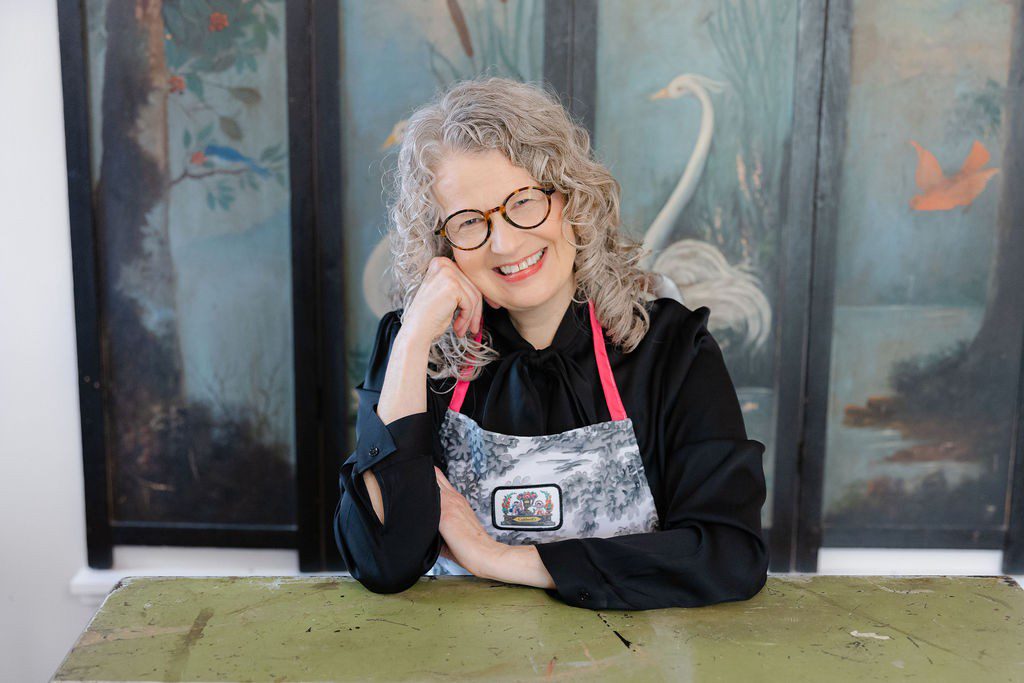
Boston designer Heather S. Caldwell turns 19th-century prints and paper ephemera into gift wrap and stationery. Her story shows how relationships with antique dealers; a librarian’s research habits; and a conservator’s respect for materials can create a distinctive creative business rooted in history while remaining useful for modern rituals of care.
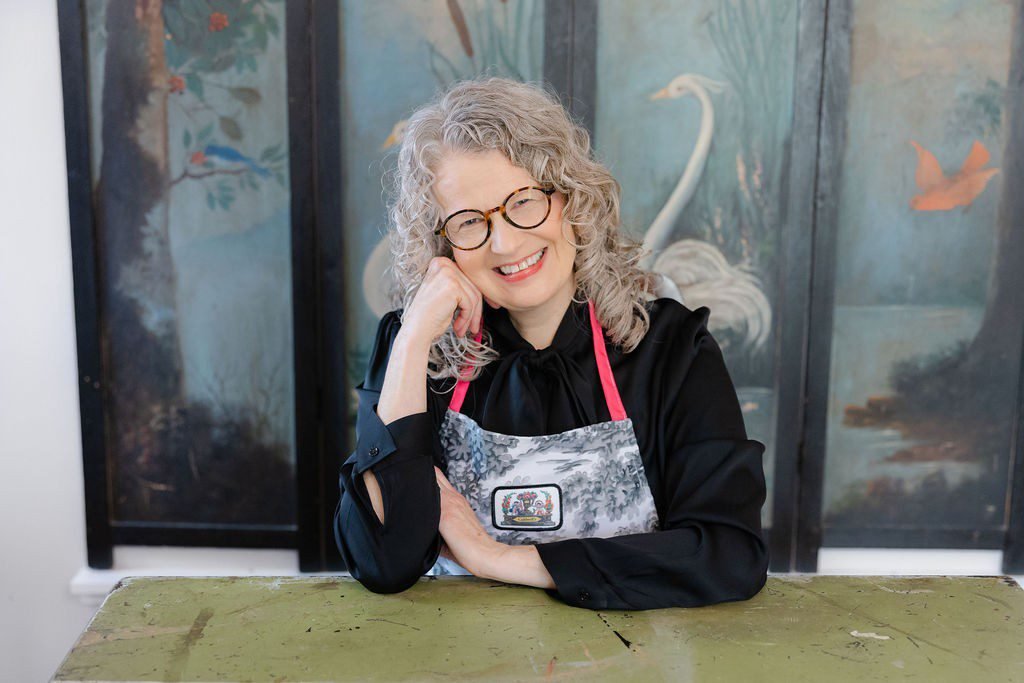
Heather S. Caldwell is the founder and designer behind Caldwell’s Miscellaneous Fancy Goods, a Boston-based studio transforming images from her personal archive of 19th-century prints and paper ephemera into fine gift wrap, postcards, and stationery. A former Harvard and MIT librarian and trained book conservator, Heather brings scholarly precision and poetic imagination to her work, creating what she calls “Pretty Papers for Particular People.” Each collection is made in the U.S.A. using FSC-certified paper and inspired by the belief that small gestures – a wrapped gift, a handwritten note – can carry great meaning.
Through her warm, literary approach and her Wishing Well newsletter, she invites fellow “Elegant Eccentrics” and “Bluestocking Babes” to share in her mission to scatter joy, celebrate history, and find beauty in the everyday. Though her designs are created as gift wrap, customers have embraced them in wonderfully imaginative ways – for decoupage, drawer and shelf liners, desk blotters, wall art, paper chains, and more – proving that even a simple sheet of paper can become a medium for creativity and delight.
Your parents were art dealers who took you to museums, historic homes, auctions and estate sales. How did their influence shape not just your business, but your identity and sense of creativity?
Heather S. Caldwell: I grew up surrounded by objects that had already lived full and fascinating lives. My parents taught me to look closely – not just at what something is, but at how it was made, who touched it, and what stories it might carry. We spent weekends in old houses, museums, and eclectic antique shops where I was encouraged to develop my own taste and “eye.” That education in curiosity shaped everything I do now. It gave me a reverence for craftsmanship and imperfection – the worn gilding on a frame, the foxing on a page – and a conviction that history and imagination belong together. My business is really a continuation of that upbringing: an effort to keep those stories alive, but in a form people can use and enjoy every day.
You write that you “have been on the hunt for charming and distinctive treasures since childhood.” What was one of the earliest finds that made you realize you were drawn to this world?
Heather S. Caldwell: When I was very small, my world revolved around my beloved antique doll, Annabelle – named after the Tasha Tudor book A is for Annabelle. My mother and I spent hours collecting tiny treasures for her: miniature tea sets, scraps of lace, wee boxes to hold all her treasure. Nothing was ever too precious to touch. I was encouraged to use things, arrange them, play with them – to handle beautiful objects with respect, but also curiosity. That gentle permission to live with lovely, old-fashioned things shaped me completely. It taught me that beauty isn’t just for display; it’s meant to be part of everyday life. That early mix of preservation and play still defines my work today.
What part of your mission gives you the greatest personal satisfaction?
Heather S. Caldwell: The most rewarding part is hearing from customers who say my papers made an ordinary moment feel special – that wrapping a gift or writing a note became a small ritual of care. My mission has always been to scatter joy, to remind people that thoughtfulness still matters. Knowing that something I designed helped someone express affection or delight is the highest compliment imaginable; it tells me that beauty and kindness still find their audience.
I also love seeing how my customers use the papers to express their own creativity. There’s such pleasure in watching people make something beautiful that feels exciting and personal, rather than standard or generic. They’re drawn to designs that are sophisticated but unpretentious – papers that invite imagination and let them scratch that creative itch in the most delightful way.
And the ways they use them never cease to surprise me. The postcards have been used as invitations, place cards, gift tags, bookmarks, and even stocking stuffers. The wrapping papers have been used to elevate all manner of parcels from hostess gifts to wedding, birthday, or holiday presents, to party favors. I love that the designs encourage this kind of inventiveness – that what begins as paper becomes, in my beloved customers’ hands, something both beautiful and uniquely personal.
Walk us through the creative process from finding an object to turning it into a finished paper product.
Heather S. Caldwell: I’m always looking. Antique shops, book fairs, estate sales, flea markets, auctions – anywhere there might be a forgotten fragment of beauty, I’m drawn to it. Over the years, as an antique dealer, I’ve developed close working relationships with other dealers around the world. They know my eye and often reach out when they find something that seems “very Caldwell’s” – a particular shade of green on a botanical plate, an engraving with a mischievous sense of humor, a fragment of wallpaper with just the right amount of patina. Those friendships and networks, built slowly over time, give me access to extraordinary materials that rarely surface in ordinary channels.
Every design begins in my personal archive – a library of antique prints, books, art, and ephemera I’ve collected over decades. I start with a piece that catches my eye for its charm, detail, or mood. I study it much the way a conservator would: examining pigments, paper type, and composition. Then I photograph or scan the image, clean it digitally while preserving its texture, and arrange the motifs into a repeating pattern or vignette. Once the design feels balanced, I review color and other specifications. The final product is printed on FSC-certified stock and – whether a wrap, postcard, or sticker – should feel as if it has stepped straight from an old cabinet of curiosities into the present.
Another element that distinguishes my designs is an unexpected use of scale. By enlarging small details from the original images, I invite the viewer to experience surprise and delight. It’s a way of keeping my products alive and fresh – not a strict reproduction but a re-imagining. My goal is to make these antique images relevant for modern life – something to use and enjoy now, rather than keep locked away in a private collection or book. In the end, it’s about bringing the past forward so it can contribute to the beauty of everyday life.
How do you stay authentic to the vintage/antique aesthetic while still innovating and keeping the product line fresh?
Heather S. Caldwell: Authenticity comes naturally when you begin with genuine historical material rather than imitation vintage graphics. Every design in my collection originates from my own archive, and I treat each source piece with the same respect I would in a conservation lab – but with a spirit of play and reinterpretation.
For example, the 19th-century French botanical print that inspired my Holly Sprig pattern was originally created for education – a hand-colored scientific illustration meant to instruct a very small and privileged audience: those who had access to books, and education enough to read and understand them. By translating that image into gift wrap, I’m, in a sense, democratizing it – bringing a rare and beautiful object out of the archive and into daily life. It’s no longer confined to a library cabinet; it can now be used, handled, and enjoyed.
That’s the kind of innovation I love – embracing the past while finding new contexts where it can feel alive again. Each of my collections aims to make historical imagery both accessible and special, offering something truly distinctive in a product space that can sometimes skew generic or twee.
Your background includes bookbinding, conservation, and working in prestigious institutions like Harvard University and the Massachusetts Institute of Technology. How do those experiences still show up in your design or product decisions today?
Heather S. Caldwell: Those years gave me both technical skill and a moral compass for handling art and artifacts. As a conservator and librarian, I learned patience, precision, and respect for materials. That discipline carries into every design choice: paper weight, ink quality, packaging – even the way each sheet folds. Working in academic collections also honed my eye for composition and storytelling. Every product must justify its place; every label must inform and enchant. My products are lighter in spirit, but they follow the same principle: nothing extraneous, everything intentional.
My time in academic research libraries also taught me how to articulate the why behind the work. Part of my role involved sharing the stories of preservation – explaining to donors, scholars, and visitors why conserving a fragile book or repairing a binding mattered. That experience helped me find the language to connect people with the purpose behind beauty. It trained me to translate scholarship into something relatable and heartfelt, which is very much what I do now. When I speak about my products – whether to a retailer, a customer, or a journalist – I’m drawing on those same skills: communicating not just what I make, but why it matters.
What evolution do you envision for your brand? How can our readers follow along and support your journey?
Heather S. Caldwell: I see Caldwell’s Miscellaneous Fancy Goods growing like a well-tended garden – expanding, but never losing its character. In the near term, I’m developing additional paper goods and giftable sets that follow the rhythm of the seasons. Longer term, I envision a flourishing wholesale program, with my designs carried in more beloved boutiques, bookshops, and specialty stores – places where beauty and story naturally belong. My goal is to make it easy for shopkeepers who share my sensibility to bring Caldwell’s Pretty Papers into their own communities.
Collaborating with others is another joyful frontier. I’d love to work with artists, designers, and kindred brands whose imaginations harmonize with mine – creating limited editions, custom patterns, or projects that celebrate paper, history, and delight in unexpected ways. Those partnerships feel like an extension of what I already love most: turning shared passions into tangible beauty.
Readers can follow along through my Wishing Well newsletter and Instagram, where I share new collections, antique finds, and small notes from my studio. Every kindred spirit who joins in – whether by subscribing, shopping, stocking the line, or simply sharing delight – becomes part of the story.