
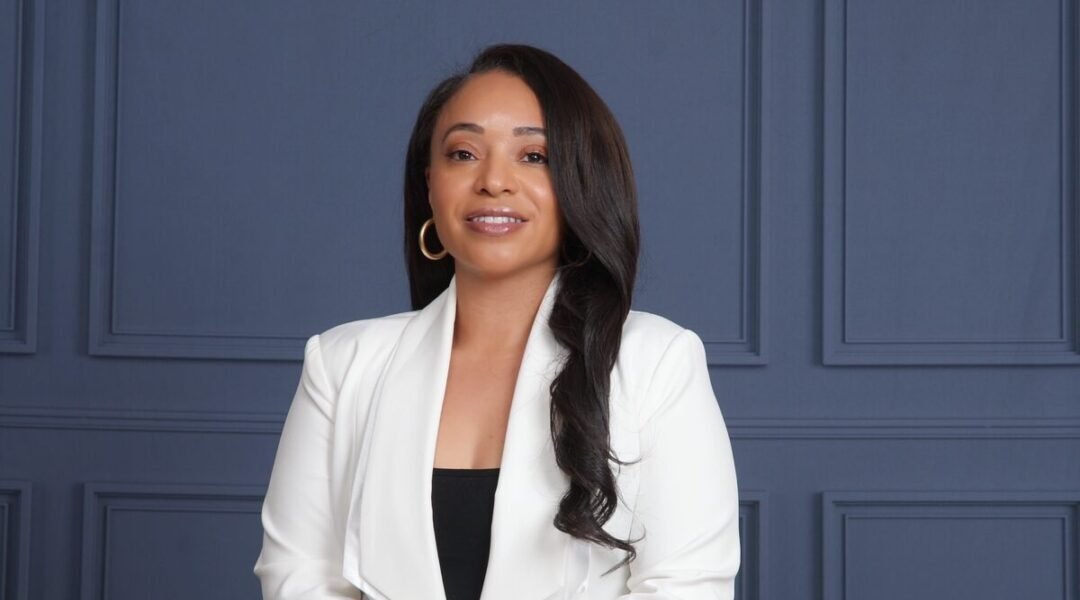

Dr. Diandra Poe’s experience at Glass Soldier reveals how community sustains leaders through grief crisis and demanding mission work. Her story emphasizes mutual support; survivor-centered purpose; and the relationships that help teams recover adapt and keep moving forward.
Dr. Diandra Poe is a visionary leader, Army veteran, and founder of Glass Soldier, a nonprofit dedicated to supporting military-connected survivors of sexual violence and trauma. With over a decade of experience in organizational leadership, prevention programming, and victim advocacy, she blends her expertise as a Licensed Master Social Worker with her passion for systemic change. Dr. Poe also serves as the Army Substance Abuse Prevention Coordinator at Fort Meade and consults nationally through The GOLD Beacon. Her mission is to build safe, resilient communities by integrating leadership, mental health, and advocacy at every level.
Company: Glass Soldier
We are thrilled to have you join us today, welcome to ValiantCEO Magazine’s exclusive interview! Let’s start off with a little introduction. Tell our readers a bit about yourself and your company.
Diandra Poe: Thank you, I’m honored to be here. I’m Dr. Diandra Poe, founder of Glass Soldier, a nonprofit dedicated to creating safer spaces for military-connected survivors of sexual violence and trauma. For me, this work is deeply personal – it’s about resilience, healing, and community. I channel that same spirit into my own life: running the Army 10-Miler every year, now training for my first marathon, and even learning ASL to connect more inclusively. One of my greatest joys is teaching with Arizona State University, preparing the next generation of social workers to carry this mission forward with strength and compassion.
Can you share a time when your business faced a significant challenge? How did you navigate through it?
Diandra Poe: Glass Soldier faced a profoundly challenging period in its early days. Shortly after founding the organization, I experienced a cascade of personal losses: the passing of my mother, a divorce, and then witnessing gun violence in a short span of time. Each of these moments tested my resilience deeply. Yet, what became clear was how crucial my community was. Even as I poured my heart into helping others, it was the support and strength of that same community that helped me through. Through all those trials, the mission of Glass Soldier and the bond with those we serve kept me going. It was a reminder that healing is a two-way street, and the community we build lifts us all.
How has a failure or apparent failure set you up for later success?
Diandra Poe: In the five years since founding Glass Soldier, I’ve learned that both “no” and “yes” are powerful tools in the journey. Early on, facing challenges and even personal losses, I discovered that a single “no” never truly stops progress. It taught me resilience and how to pivot gracefully. More importantly, I realized that saying “yes” to distractions can mean saying “no” to our true mission. Embracing the wisdom of both yes and no has helped me cut through the noise and focus on what really matters. That mindset shift has been a guiding light and a source of success as we’ve grown.
How do you build a resilient team? What qualities do you look for in your team members?
Diandra Poe: When it comes to building a resilient team at Glass Soldier, it all starts with genuine buy-in to our community and our mission. Many people say they support the troops or consider themselves patriots, but the work we do—addressing domestic and sexual violence within a military context—is not an easy conversation or task. It’s crucial that our team members are deeply committed to centering survivors rather than institutions. We’re not just looking for people who support a cause on the surface; we need those who understand the complexity, who are ready to navigate the tough realities, and who remain survivor-focused through it all. That’s how we ensure our team is not only resilient but truly aligned with the heart of our mission.
How do you maintain your personal resilience during tough times?
Diandra Poe: For me, maintaining resilience as the CEO is deeply anchored in my faith and values. Staying grounded in what I believe—leading with love, patience, compassion, and empathy—is what helps me stay resilient through any challenge. It’s also about surrounding myself with a team and community who share that same alignment—people who understand the importance of leading with heart. Through their wisdom and shared experiences, I find strength. And honestly, seeing others thrive and heal is a huge source of my own resilience. That vicarious resilience—watching others overcome—fuels me to keep going and keeps me anchored in our mission.
What strategies do you use to manage stress and maintain focus during a crisis?
Diandra Poe: When it comes to staying focused under stress, my first strategy is always rooted in my prayer life. That spiritual grounding is critical for me. Beyond that, I rely on grounding techniques and emotional intelligence to create a pause between what I feel and how I respond. When stress hits, I take a step back, use the breathing and grounding techniques I’ve learned as a therapist, and let my thinking brain help guide my feeling brain. It’s also about leaning on the people around me who can gently remind me to breathe and refocus when things get overwhelming. Since I do occasionally experience panic attacks, having these grounding tools and a supportive network really helps me maintain focus and calm.
How do you communicate with your team during a crisis?
Diandra Poe: In a crisis, I naturally lean into my role as a therapist with my team. My first question to them is, “What do we have?” I encourage everyone to see that even when things look bleak, this is not a moment of defeat but an opportunity to explore ideas. I love the iterative process—bringing all voices to the table, brainstorming together, and finding a path forward as a unit. During tough times, we prioritize taking care of each other first, making sure everyone feels supported and heard. Then we iterate and find a way through the storm together. It’s all about collective resilience and knowing we can navigate any challenge as a team.
What advice would you give to other CEOs on building resilience in their organizations?
Diandra Poe: If I were to give other CEOs advice on building resilience in their teams, I’d say: get to know your people. This doesn’t mean you need to know everyone’s life story, but it does mean understanding their baseline—what motivates them, what they enjoy about their work, and what makes them feel valued. People often don’t leave jobs; they leave because they feel unseen by leadership. So, even if you have a large team, take the time to learn something new about someone you might not interact with every day. That simple effort of connection can strengthen the entire team’s resilience and foster a culture of trust and support.
How do you prepare your business for potential future crises?
Diandra Poe: When it comes to preparing your business for potential future crises, I’d say it’s all about learning from others and staying adaptable. Look at what similar organizations or even larger companies are doing to navigate uncertainty. You don’t have to be a Fortune 500 company to pay attention to how they prepare. By understanding how larger or more established organizations build resilience—whether it’s financial safeguards, flexible team structures, or innovative program planning—you can glean insights that fit your own scale. It’s about staying informed about industry trends and future innovations so that even if you’re a smaller organization, you’re never caught completely off guard. Ultimately, preparing for the future means being proactive, learning from others, and keeping your team and structure adaptable so you can weather whatever comes your way.
What’s the most important lesson you’ve learned about leadership in times of crisis?
Diandra Poe: The most important lesson I’ve learned about leadership in times of crisis is accountability. A good leader steps up and takes responsibility, even if it means taking the hit to protect the team. It’s about minimizing the impact on your people and owning the outcome, regardless of the circumstances. I learned this lesson in the military, where it was clear that even if my soldiers didn’t fully understand a mission or if something went wrong, it was my responsibility as the leader to shoulder that accountability and ensure we learned and improved for next time. That sense of ownership builds trust and resilience within the team, no matter what challenges arise.