
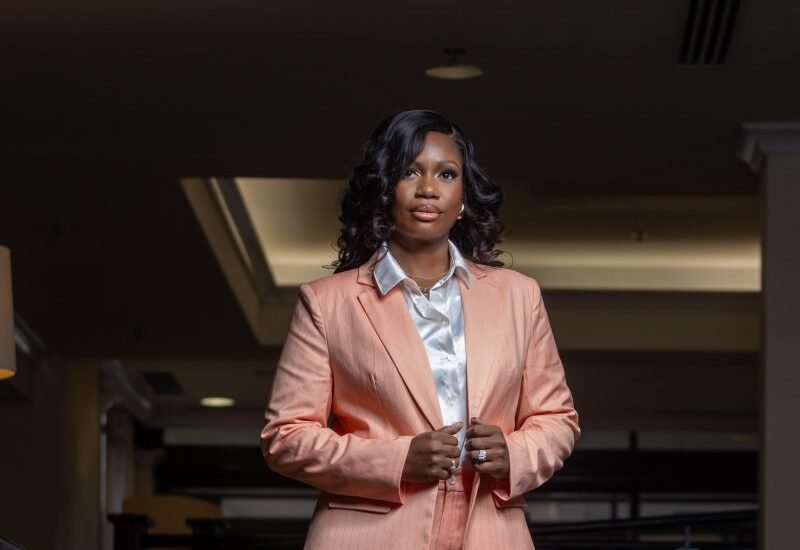

Dr. Marline C. Duroseau shows how trust and honest communication strengthen teams during uncertain seasons. Her experience leading through pandemic pressure reveals why meaningful relationships matter in business. By creating space for feedback and shared purpose; leaders can help people adapt together while keeping connection at the center of organizational resilience.
Dr. Marline C. Duroseau is a transformational leader, CFO, resilience expert, and award-winning author who has built a career empowering others through adversity. With over two decades of executive leadership experience, she has navigated personal storms—including a 15-year infertility journey—while guiding organizations through crisis and change. As the founder of MCD Business Enterprise and the Women Matter® brand, she equips women and professionals with tools to lead confidently, bounce forward after setbacks, and turn life’s disruptions into opportunities. Dr. Duroseau is also a doctoral researcher and fertility advocate, using her voice and expertise to champion emotional resilience and inclusive leadership.
Company: MCD Business Enterprice LLC
We are thrilled to have you join us today, welcome to ValiantCEO Magazine’s exclusive interview! Let’s start off with a little introduction. Tell our readers a bit about yourself and your company.
Marline C. Duroseau: My name is Dr. Marline C. Duroseau, and I’m the founder and CEO of MCD Business Enterprise LLC, a multifaceted company committed to transformation, empowerment, and legacy-building. I wear many hats: I’m a seasoned CFO, a CPA with over two decades of executive leadership experience, a resilience and fertility coach, an author, and a doctoral researcher.
MCD Business Enterprise is home to several powerful brands, including Women Matter®, which empowers women to lead with confidence and purpose through coaching, workshops, and digital content, and MCD Publishing, which helps aspiring authors bring their stories to life. I’m also the visionary behind Angel’s Grace Foundation, a nonprofit that supports families through remembrance and healing after pregnancy or infant loss.
Through all of my work, my mission is clear: to help people reclaim their identity, lead with authenticity, and rise—no matter what storms they’ve weathered.
Can you share a time when your business faced a significant challenge? How did you navigate through it?
Marline C. Duroseau: I can recall a period when my business faced a significant challenge during the pandemic. Like many leaders, I had to navigate sudden uncertainty without a playbook. At the time, I was leading teams in a healthcare organization that was hit with high turnover and limited resources, while also laying the foundation for my own coaching and consulting business. The challenge was two-fold: ensuring my team could still deliver results under immense pressure, and keeping my business vision alive during a time when most people were focused on survival.
To navigate through it, I leaned heavily on resilience and adaptability. First, I created open lines of communication with my team, offering transparency about challenges and encouraging honest feedback. This helped maintain trust during a time of rapid change. Second, I focused on prioritization, separating what was urgent from what was important, and reallocated. For my coaching business, I pivoted by creating virtual offerings and leveraging digital platforms to continue serving clients when in-person interactions weren’t possible.
Looking back, that challenge taught me that resilience is not about having all the answers, but about having the courage to adjust, keep moving forward, and bring others along with you. It also reminded me that challenges often become the catalysts for innovation and growth.
How has a failure or apparent failure set you up for later success?
Marline C. Duroseau: I believe resilient teams are built through a combination of trust, communication, and empowerment. During challenging seasons in my leadership journey, like navigating high turnover during the pandemic, I found that resilience started with creating an environment where people felt safe to speak openly, knew their contributions mattered, and understood that we were in it together. I make sure my teams have clarity of purpose, access to the right resources, and the encouragement to adapt when circumstances change.
When I think about the qualities I look for in team members, three stand out: adaptability, accountability, and collaboration. Adaptability ensures they can pivot when things don’t go as planned. Accountability keeps them focused and dependable, especially under pressure. And collaboration reminds us that resilience isn’t about one person—it’s about how we rise together. I also value emotional intelligence and a growth mindset, because resilient teams don’t just survive challenges, they grow stronger from them.
Ultimately, resilience comes from a shared vision and a culture of support. If a team trusts their leader and each other, they can face any disruption with confidence.
How do you build a resilient team? What qualities do you look for in your team members?
Marline C. Duroseau: I believe resilient teams are built through a combination of trust, communication, and empowerment. During challenging seasons in my leadership journey—like navigating high turnover during the pandemic—I found that resilience started with creating an environment where people felt safe to speak openly, knew their contributions mattered, and understood that we were in it together. I make sure my teams have clarity of purpose, access to the right resources, and the encouragement to adapt when circumstances change.
When I think about the qualities I look for in team members, three stand out: adaptability, accountability, and collaboration. Adaptability ensures they can pivot when things don’t go as planned. Accountability keeps them focused and dependable, especially under pressure. And collaboration reminds us that resilience isn’t about one person—it’s about how we rise together. I also value emotional intelligence and a growth mindset, because resilient teams don’t just survive challenges, they grow stronger from them.
Ultimately, resilience comes from a shared vision and a culture of support. If a team trusts their leader and each other, they can face any disruption with confidence.
How do you maintain your personal resilience during tough times?
Marline C. Duroseau: For me, resilience is sustained through a balance of mindset, routines, and support systems. In tough times, whether it was navigating infertility or leading through organizational crises, I’ve learned that I have to be intentional about how I care for myself so that I can continue showing up for others.
First, I lean heavily on my faith and perspective. Grounding myself in prayer and reflection helps me find meaning in the struggle and reminds me that challenges are temporary but growth is lasting.
Second, I maintain resilience by prioritizing self-care and boundaries. This means making time for exercise, rest, journaling, or simply pausing when needed. I view self-care not as a luxury, but as a strategy for sustainability.
Third, I rely on my support network. Surrounding myself with people who uplift me, whether my family, mentors, or peers, reminds me that I don’t have to carry everything alone.
Finally, I focus on purpose. Remembering why I do what I do empowering women, mentoring future leaders, and building a legacy, gives me the motivation to push forward even when circumstances are hard.
Resilience for me isn’t about being unshakable, it’s about bouncing back with more clarity, strength, and determination than before.
What strategies do you use to manage stress and maintain focus during a crisis?
Marline C. Duroseau: During a crisis, I focus on pausing and prioritizing what truly matters so I don’t get overwhelmed. I rely on structured routines like reflection and short breaks to stay grounded, and I delegate based on team strengths to reduce pressure. Clear communication keeps everyone aligned, and I anchor myself in purpose to maintain perspective. Most importantly, I view self-care as a strategy, because if I’m not well, I can’t lead well.
How do you communicate with your team during a crisis?
Marline C. Duroseau: In a crisis, I prioritize clear, consistent, and transparent communication. I make sure my team knows the situation, the priorities, and their specific role so there’s no confusion. I also create space for two-way dialogue, encouraging questions, feedback, and even concerns, because people need to feel heard during uncertain times. Finally, I focus on steady, calm messaging to keep everyone grounded, even when circumstances are changing quickly. This combination of clarity, openness, and reassurance keeps the team aligned and resilient.
What advice would you give to other CEOs on building resilience in their organizations?
Marline C. Duroseau: My advice to other CEOs is to view resilience not as a reactive skill but as an organizational culture. First, invest in clarity of vision and communication, when people understand the “why,” they can navigate the “what” more effectively during disruption. Second, build adaptability into systems and teams by encouraging innovation, cross-training, and flexibility so you’re not dependent on one way of doing things. Third, prioritize well-being and trust, resilient organizations are made of resilient people, and leaders must model and support balance to prevent burnout.
Finally, see every challenge as an opportunity to refine your strategy and grow stronger. Resilient organizations don’t just bounce back, they bounce forward, emerging with greater strength, clarity, and innovation.
How do you prepare your business for potential future crises?
Marline C. Duroseau: I prepare my business for future crises by focusing on proactive planning, adaptability, and people-first leadership. First, I build contingency plans that address both operational and financial risks, ensuring we have reserves and flexible strategies ready if disruptions occur. Second, I prioritize agility in systems and processes, whether through technology, cross-training, or diversified revenue streams, so the business can pivot quickly when circumstances change.
Equally important, I invest in my team’s resilience by fostering open communication, empowering decision-making at every level, and creating a culture where innovation and problem-solving are encouraged. When people feel trusted and supported, they respond more effectively to challenges.
Finally, I take time to reflect on past disruptions, asking: What worked, what didn’t, and how do we strengthen our response next time? This cycle of learning ensures that each crisis, rather than weakening the organization, actually equips us to emerge stronger and more prepared.
What’s the most important lesson you’ve learned about leadership in times of crisis?
Marline C. Duroseau: The greatest lesson is that leadership in a crisis isn’t about having all the answers—it’s about creating clarity, calm, and connection. Teams need steady guidance, honest communication, and empathy more than perfection. Crises taught me that when leaders stay grounded and people-focused, challenges become opportunities to grow stronger together.