
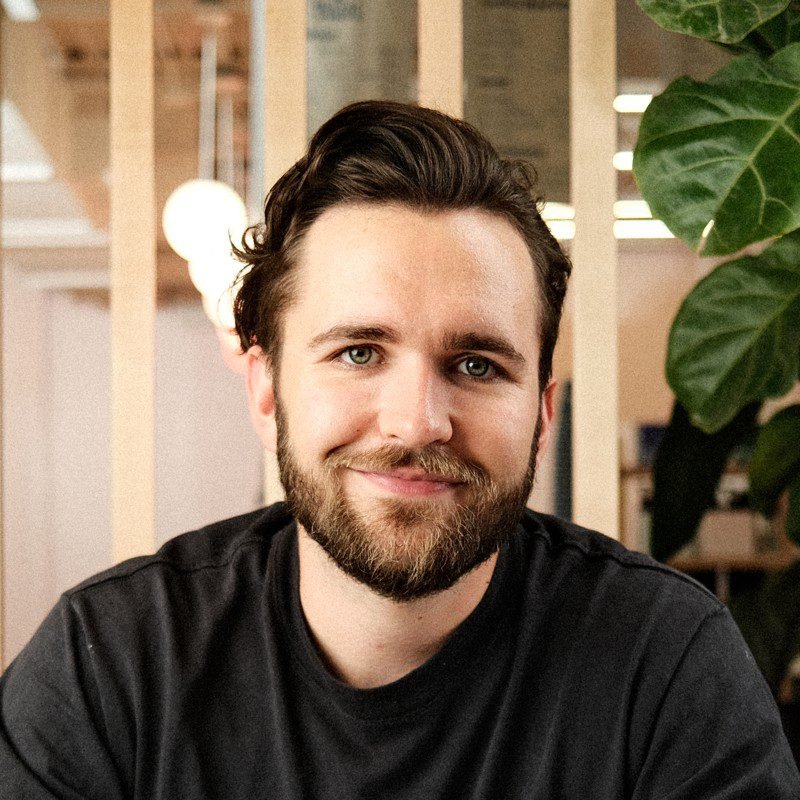

Riley Westbrook shows how a growing coffee brand can use technology to strengthen relationships rather than replace them. Valor Coffee connects customer knowledge across its café and online systems so baristas can create warmer conversations. The result is a practical model for building loyalty through thoughtful hospitality.
As Co-founder and Creative Director of Valor Coffee, he has been a driving force behind the company’s growth from a simple idea in 2016 to a multi-location specialty coffee brand. With no prior business experience, he and his friends launched Valor with a mobile espresso bar, founded on the vision of pairing an excellent product with genuine, empathetic hospitality.
Company: Valor Coffee
We are thrilled to have you join us today, welcome to ValiantCEO Magazine’s exclusive interview! Let’s start off with a little introduction. Tell our readers a bit about yourself and your company.
Riley Westbrook: I am the Creative Director and one of the Co-Founders of Valor Coffee, a company my friends and I started in 2016 with the idea that great coffee should always be paired with great service. We began with a mobile espresso bar that could go anywhere, moved into roasting in 2018, and opened our first cafe in downtown Alpharetta in 2019. Since then we have grown to multiple locations, including our roasting headquarters in Roswell and a cafe in Dunwoody.
At Valor, we put just as much thought into hospitality as we do into sourcing and roasting coffee. My role has shifted over the years from financial management and overseeing roasting operations to leading our marketing and media. Today I spend most of my time shaping how we communicate our brand and building systems that ensure every guest interaction is warm, intentional, and memorable.
What emerging technology trends do you believe will have the most profound impact in the next 5-10 years?
Riley Westbrook: I believe automation in agriculture will have the most profound impact in the next 5 to 10 years. Coffee depends on farming, and many producers struggle with labor shortages, unpredictable weather, and rising costs. Machines that are able to help with selective harvesting, soil monitoring, and water management will completely change how reliable the supply chain is.
If farmers can use affordable tools that measure plant health with accuracy or harvest cherries at the right ripeness without wasting fruit, the result will be higher quality beans and more stability for both producers and roasters. That kind of progress will matter more than anything happening in cafés because it starts at the source
Can you share a specific technological breakthrough from your company that has the potential to reshape your industry?
Riley Westbrook: We’ve been developing a proprietary internal platform we call the “Empathy Engine.” It is a system designed to give our baristas the information they need to provide incredibly personal service, and I believe it has the potential to reshape how our industry approaches hospitality.
The Empathy Engine is not a customer-facing app. It is a smart, internal tool that connects our cafe’s point-of-sale system with our online store and subscription service. When a regular guest who has opted into our loyalty program makes a purchase, our barista’s screen shows a small, discreet notification with a few helpful insights.
For example, it might show their usual drink (“Cortado”), the last bag of beans they bought online (“Hayride blend, 3 weeks ago”), and even the brew gear they own if they bought it from us (“V60 brewer”). It is designed to give our team simple, relevant context about the guest in front of them, turning a potentially generic transaction into a genuine conversation.
I believe this is a breakthrough because it systematizes personal connection. The specialty coffee industry struggles with a reputation for being intimidating, and high staff turnover can make it hard to build that classic “neighborhood regular” feeling. Our system solves this. It gives a brand new barista the context and knowledge of someone who has served that guest for years.
This allows us to move beyond simple transactional service. Instead of just asking, “What can I get for you?” our barista can now say, “Hey Riley, welcome back! Are you enjoying that Hayride blend at home? If you like that, you might want to try our new single-origin from Guatemala for your V60.” It uses technology not to replace human interaction, but to make it more meaningful and personal, which I believe is the future of customer service.
How do you approach innovation while balancing the need for practicality and market readiness?
Riley Westbrook: For any new idea, process, or piece of equipment, we ask two simple questions: “Will this make our coffee taste better?” and “Will this make our guests’ day better?” If we do not get a clear and enthusiastic “yes” to at least one of those, we do not waste our time on it.
Our ultimate test for practicality is what we call the “Saturday morning test.” A new idea has to be simple, reliable, and intuitive enough for our baristas to use flawlessly during the craziest weekend rush. If it adds complexity or slows down our ability to connect with guests, it is not a practical innovation for us, no matter how exciting it seems.
What challenges do you face in integrating cutting-edge technology into existing business models?
Riley Westbrook: The hardest part of bringing new technology into our cafes is making sure it supports our core value of empathy, rather than getting in the way of it. Our business is built on the genuine, human interactions that happen over the counter every day.
For example, when we introduce a new system that gives our baristas more information about a guest’s preferences, the challenge is not a technical one. The challenge is training our team to use that information to spark a real conversation, not just read from a script. Technology should always be a tool that works in the background to empower our team to be more present, attentive, and caring. Our constant focus is making sure that technology serves the human connection, and never the other way around.
How do you foster a culture of innovation within your organization to stay ahead in the tech race?
Riley Westbrook: We create a culture of innovation by empowering our front-line team of baristas and roasters to be our main source of new ideas. For us, it is less about a “tech race” and more about a constant, practical search for better ways to serve our guests and improve our coffee. Our best ideas do not come from a boardroom; they come from the people doing the work every single day. Our baristas are the experts on the guest experience, and our roasters know our coffee better than anyone. We have built a culture where we actively and regularly ask them, “What is frustrating you?” and “What could be better?”
We have a dedicated digital channel for ideas and hold regular team meetings where the primary goal is to identify problems and brainstorm solutions. It is about creating a space where everyone feels safe and responsible for pointing out what is broken. We trust our team to see the opportunities we might miss.
The most important part of this culture is that we act on the ideas we receive. An idea box is useless if it just collects dust. When a team member suggests a better way to organize the bar for efficiency or a new filtering method for our cold brew, we test it.
For example, our current, more efficient process for prepping our cold brew came directly from a barista who was frustrated with the old system. We tried her suggestion at one cafe, saw that it saved about 30 minutes of labor per batch, and immediately implemented it company-wide. When people see their contributions making a real, tangible difference, it encourages everyone to think like an owner. That is how you build a true culture of innovation from the ground up.