
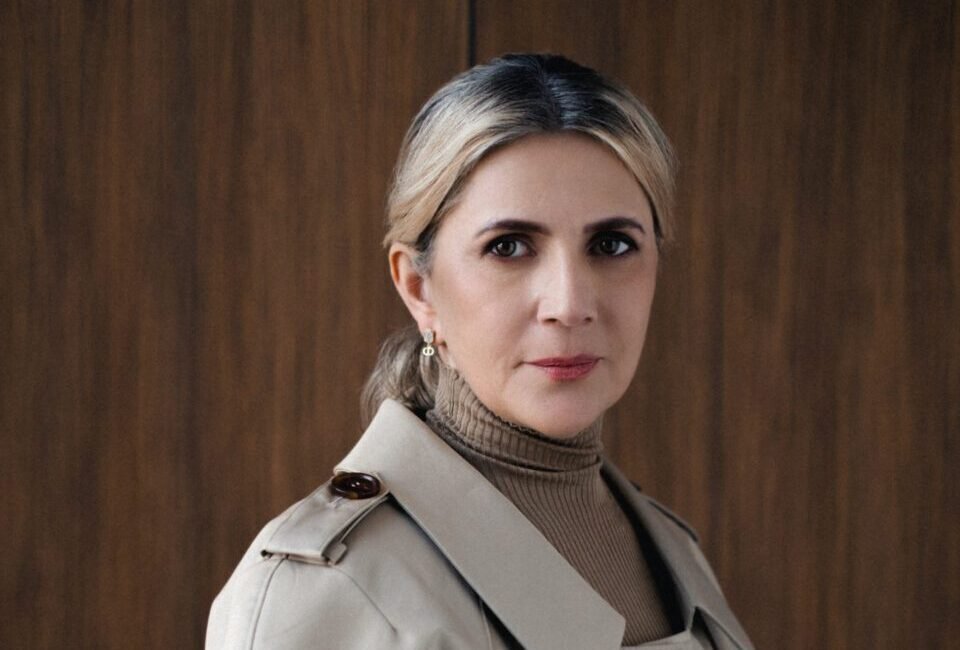

Mareta Gevorkyan’s leadership begins with a deep connection to Dilijan and a clear belief that business can strengthen cultural legacy. Her work through Green Rock combines public spaces; education; ecology; and community development. This interview explores how transparency; purpose; and empowered teams help organizations remain resilient through uncertainty.
Mareta Gevorkyan is an entrepreneur creating projects that support the sustainable development of Armenia. She was born and raised in Dilijan, a town with a unique natural and cultural heritage.
Together with the Green Rock team, Mareta Gevorkyan leads projects focused on the creation and revitalization of public spaces and the development of cultural initiatives that make urban life more comfortable and open new opportunities for growth and profession, creating new points of attraction for residents and visitors.
Mareta Gevorkyan is also the founder of the Green Rock Foundation, which implements projects in community development, culture, ecology, and education — from launching the international hospitality school Apicius to the Meet Dilijan initiative, aimed at promoting sustainable tourism and local business and recognized with the MICE Excellence Award.
In addition, Mareta Gevorkyan develops cultural and lifestyle projects through an international group of companies Maison Marom and Keron Development Foundation, promoting Armenian design, craftsmanship, and architecture.
Company: Green Rock Foundation
We are thrilled to have you join us today, welcome to ValiantCEO Magazine’s exclusive interview! Let’s start off with a little introduction. Tell our readers a bit about yourself and your company.
Mareta Gevorkyan: I grew up in Dilijan, a place whose nature, culture, and rhythm have shaped me more than anything else. That connection has stayed with me, and it’s the reason I focus so much of my work on projects that help Armenian communities grow in a thoughtful, sustainable way.
With the Green Rock team, I work on improving everyday life in our towns — revitalizing public spaces, supporting cultural activity, and creating opportunities for people to learn new skills or develop their careers. As the founder of the Green Rock Foundation, I lead projects in education, culture, ecology, and community development. Some of the initiatives I’m proud of include bringing the Apicius international hospitality school to Armenia and launching Meet Dilijan, a sustainable tourism program that received the MICE Excellence Award.
Alongside Green Rock, I also build cultural and lifestyle projects through Maison Marom and the Keron Development Foundation, where I highlight Armenian design, craftsmanship, and architecture. Across everything I do, my aim is simple: to create meaningful, long-lasting initiatives that strengthen communities and help people feel rooted, supported, and inspired.
Can you share a time when your business faced a significant challenge? How did you navigate through it?
Mareta Gevorkyan: The Green Rock Management Group’s projects in sustainable development, especially for the town of Dilijan, tend to be significant.
To work effectively in such an environment, Green Rock makes sure our approach is transparent. We aim to be clear about our intention: sustaining the heritage significance, rather than replacing it.
How has a failure or apparent failure set you up for later success?
Mareta Gevorkyan: I don’t believe in failure, just feedback. And feedback, if correctly interpreted, is learning.
So, as already stated, Green Rock Management Group is known to be engaged in large-scale sustainable development projects in Armenia. At times, we naturally, and rightly so, attract public feedback.
This feedback, straight from the grassroots level, has ultimately reinforced the need to incorporate our business activities with an active, highly visible, and transparent approach to Social Stewardship and Cultural Diplomacy. This philosophy strictly states that business must be part of the cultural legacy.
Green Rock Foundation is the non-profit division of Green Rock Management Group. Green Rock Foundation has a specific cause in mind, which is the improvement of quality of life in Dilijan. The Foundation has effectively implemented Dilijan social projects in the areas of education, sports, arts, and environment.
One such example is the Apicius Armenia International School of Hospitality. This is a hospitality school started in collaboration with Italian partners in order to be able to provide world class education in hospitality, food, and wellness. This makes Dilijan a location in which one would be able to not only stay, but also receive world-class education.
How do you build a resilient team? What qualities do you look for in your team members?
Mareta Gevorkyan: A strategy I have found helpful in constructing a resilient team is one that is based on the conviction that business is a cultural legacy tool.
Through the Talent Pool program run by the Keron Development Foundation, we invite foreign professionals to come to Armenia on residency, with the objective of ensuring their expertise and know-how are embedded in the local talent base. On the other hand, in my hometown of Dilijan, I also work to nurture local talent and build local education capacity, such as in the Apicius Armenia Hospitality School.
Also, resilience translates to inclusivity and specialization. Our organizations proudly cultivate women leaders. Equality is incorporated in our community projects as well.
On the other hand, some of our global projects require an extraordinary level of expertise. The people behind Rien-à-Porter and the Maróm Label (based in Paris) need to be conversant in the design nuances of France, along with the global design benchmarks in the luxury category, while upholding their Armenian heritage.
The individuals I am blessed to call members of my team demonstrate professionalism, depth of culture, and an attitude of ownership. My job is to provide vision and structure, then to move away and empower talented teams to build the future.
How do you maintain your personal resilience during tough times?
Mareta Gevorkyan: To remain resilient, I have to keep myself grounded in terms of purpose. Where I get my strength is in knowing and in believing with absolute conviction that every single thing I do must, in the end, bring some kind of benefit in terms of ensuring a more prosperous future for my homeland. When I do business, I treat it almost like a means of creating cultural heritage, rather than just conducting business. Through the Keron Development Foundation, Green Rock Foundation and Hosq Foundation, I am also able to give back.
Of course I understand that these projects have other contributions, but my focus is helping those communities and the individuals that are part of our generation to reach new opportunities and experiences.
Resilience is not something one possesses, but rather something one chooses. And what I choose, every day, is to be resolute.
What strategies do you use to manage stress and maintain focus during a crisis?
Mareta Gevorkyan: When a crisis looms, I start with the distinction between vision and reaction. Clarity is the best protection I have found. I provide the vision how I see it, then rely on others to execute. I have elected to save my energy for creation, which means my job is to build, to nurture, and to continue moving forward.
When I see the impact, when I see lives being improved, when I see beauty being built, I am grounded. I am reminded that the answer is always progress, one step at a time, and always remaining constant in the vision I am moving towards.
And when I want to calm my mind, I look up at the sky or love to look at the water (if you haven’t seen Sevan Lake in Armenia, it’s one to look upon). Or when I am in Dillijan or any place in the world at night, I watch the stars twinkling up and am reminded of our own small part in the big plan. Sometimes, when I’m feeling knocked off balance, I listen to music and let it carry me away. These remind me that resilience is not something tough, something hardened. Resilience is something graceful, composed, and committed to creation, not fear.
How do you communicate with your team during a crisis?
Mareta Gevorkyan: When a crisis hits, I speak with calmness, structure, and complete clarity. I have complete faith in all the teams I work with. They understand our ‘mission’, our need to serve society, children, and the future.
Our foundations, Green Rock Foundation, Keron and Hosq, support this strategy in terms of transparency and the publishing of measurable outcomes. Even in emergencies, our narrative is one of fact rather than an emotional one.
I feel like when everything feels uncertain, people read into everything a leader says, so I’m always careful to be precise and balanced in everything, and also not to inhibit the team from making their own decisions and following their own path.
What advice would you give to other CEOs on building resilience in their organizations?
Mareta Gevorkyan: What I would tell other leaders is that resilience is not reaction, resilience is within design and process. We should aim to build systems that can adapt, build people who can think, build institutions that can stand on their own, and invest in education and talent first.
Strengths reside in people. When they’re empowered, equipped, and invested in, they drive innovation and sustainability during times of uncertainty. Investing in their financial depth, agility in their digital initiative, and authenticity in their cultural foundation is not an indulgence; rather, they represent the spine of their sustainability. I’ve learned to plan in terms of decades, not quarters, and nurture ecosystems in which every part of the equation holds up the other, even when one part is challenged.
And resilience is also, of course, about grace and trust. Lead with calm. Listen. Empower others to move with purpose. I am absolutely committed to soft power – the capacity to lead by example, to mentor, to be consistent. Transparency and accountability protect both reputation and outcome. Sustainability must be experienced, not just stated. So resilience, in my view, is the art of balance, harmoniously combining patience with ambition, humanity with structure.
How do you prepare your business for potential future crises?
Mareta Gevorkyan: I work to create integrity, legitimacy, and independence in every level of the ecosystem. I distinguish between structures, finance, and communications in such a way that every part can be legitimate in and of itself. I invest in clean ownership, clean finance, and absolute professionalism, since integrity starts with integrity.
I plan ahead by thinking ahead. I build strong financial foundations, restore heritage with respect, and exercise patience in every investment. I believe that if you show integrity and care, you build yourself a foundation of goodwill in any crisis situation.
I also prepare in the sense that I am in close proximity to the community, sensing their concerns with humbleness. I bring back what is historic. I speak publicly with clarity on what is new. I attract global talent to come to Armenia, even while growing their own, in the sense that resilience is ultimately human before it is operational. Since I steer clear of politics, I concentrate on contribution, making sure to build in such a way with such temperament that when I build, the future can handle any tempest.
What’s the most important lesson you’ve learned about leadership in times of crisis?
Mareta Gevorkyan: One of the most important things I have learned throughout the years with respect to crisis leadership is what the concept of balance means. I have learned, however, that the reality of leadership involves neither being everywhere nor doing everything. Being everywhere does indeed mean being everywhere. Leadership involves choosing the first vision, then trusting others to carry out the execution with integrity. I do the heavy lifting, but in doing so, I also put physical as well as mental boundaries between myself and what I am doing. Boundaries, not distance, result in trusting others. And trusting others means being able to balance complexity with clarity. I have learned, then, that empowerment is indeed the greatest form of leadership. I believe that crisis is the school of humility, discipline, and control, and when we can demonstrate our true colors to our teams. I speak with deliberation in order to avoid confusion in an urgent situation when one must be calm. I count on high-performance, accountable teams with the ability to speak and operate with expertise, while I safeguard our vision and our set of values. I understand the need to protect my own reserves in terms of strategy and stewardship, rather than reaction.