
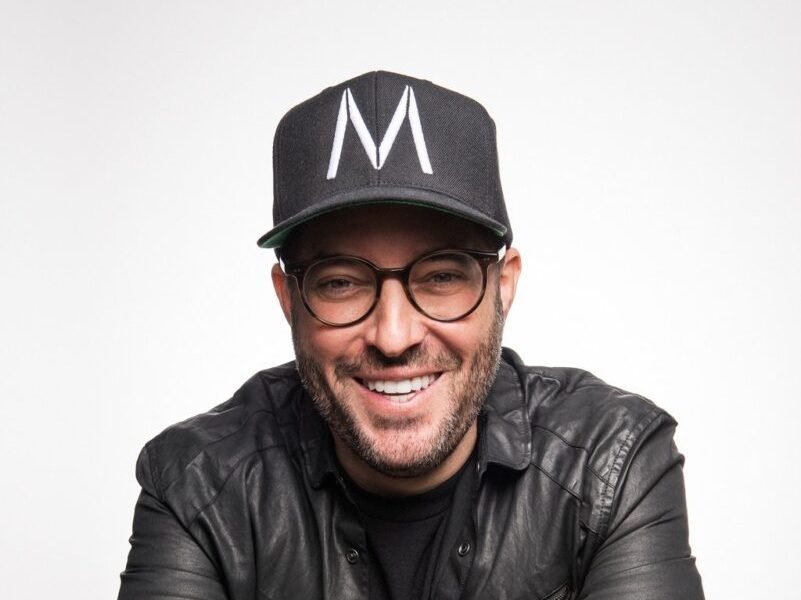

Paul Goldman’s Muserk story shows how a rights company can build global relationships by delivering measurable results. From partnerships across Asia Europe and the United States to technology that finds disconnected royalties; the company earns trust through performance rather than oversized budgets. It is a practical lesson in relationship-led growth.
Muserk is a global rights management company that helps music and video rights holders collect royalties from digital platforms.
Company: Muserk
We are thrilled to have you join us today, welcome to ValiantCEO Magazine’s exclusive interview! Let’s start off with a little introduction. Tell our readers a bit about yourself and your company.
Paul Goldman : My name is Paul Goldman, and I’m the Founder & CEO of Muserk, a global music rights administrator. After 20 years in New York as a television, jingle, and music producer, I became frustrated that I was missing royalties I knew I was owed. This became the spark for Muserk, which aspires to get copyright owners paid their due royalties through a faster, less painful process. Today, we manage 25 million works across 210 territories. Our mission is simple: to ensure that every artist and rights holder gets paid what they’re owed, wherever their music is played. “Collect every royalty, everywhere!”
What was the defining moment or challenge that prompted you to pivot your business model, and how did you recognize it was time for a change?
Paul Goldman : The spark came from personal frustration, through my own experience as a copyright holder. There was all this work that I had done, yet I couldn’t collect my own royalties, and I saw countless creators in the same position. The industry giants claimed that they were focused on scale, but their systems and technology suggested otherwise—leaving massive gaps in accuracy and global reach. I realized there was an opportunity to build technology that closed those gaps, turning inefficiencies into revenue and creating trust with rights holders who simply wanted to be paid fairly. Muserk’s innovations don’t just improve existing systems—they reimagine rights management for the 21st century, closing the gap between creative output and fair compensation. By leveraging cutting-edge AI and a creator-first approach, Muserk is solving one of the most urgent and overlooked problems in the digital age: ensuring that those who fuel culture are rewarded for their contributions.
Can you walk us through the most significant change you made to your business model and the immediate impact it had on your company’s trajectory?
Paul Goldman : Our differentiator is Blue Matter™ combined with the expertise of a team that understands royalties at a granular level across the global market. While industry giants rely on outdated systems and scale through headcount, we paired expert technology with comprehensive human knowledge of global royalty collection. This allows us to process billions of data points, resolve unmatched works, and recover royalties on a large scale. Blue Matter® enables Muserk to sift through millions of usage data in mere minutes, find disconnected royalties, and identify lost money left in the shadows on platforms such as YouTube, Spotify, Apple Music, and more. As an automated system, the technology can perform at a scale equal to hundreds of humans, enabling quicker earnings with mitigated leakage for industry professionals. Since its development eight years ago, customers using Blue Matter® saw a 100% increase in first-year royalties and a 422% cumulative growth over three years. By combining technology with human expertise, we consistently deliver results that the industry giants cannot.
How did you convince your team, investors, or stakeholders to embrace such a dramatic shift, especially if it involved risk or uncertainty?
Paul Goldman : We stay lean and focused. Instead of trying to match the giants in headcount or marketing spend, we focus our energy on providing optimal outcomes for our clients and improving technology where we can. By consistently delivering more revenue to rights owners, we build trust and credibility that continues to open doors globally. Our partnerships in Asia, Europe, and the U.S. don’t come from massive budgets—they come because we proved our technology and team can outperform legacy systems.
What was the biggest obstacle you faced during the pivot, and how did you overcome it to ensure the new model’s success?
Paul Goldman : Once, we had a customer show their results from Muserk to their current administrator, one of the biggest in the world. The administrator’s response was to dismiss Muserk as “snake oil salesmen.” Instead of being insulted, we were energized. This demonstrated to us that even the industry giants didn’t know how to access the data we produce. What they thought was “magic” was actually factual, indisputable information. Their attempt to discredit us as a small player backfired. What was meant to belittle us instead highlighted the administrator’s own blind spots. We stood our ground, and the narrative flipped in our favor.
Looking back, what’s one key lesson from your pivot experience that you’d share with other CEOs considering a major business model shift?
Paul Goldman : For me, it’s clarity of purpose. Giants can distract you with noise, but if you stay focused on solving the core problem better than anyone else, scale becomes your ally instead of your obstacle. At Muserk, our mission has always been simple: creators deserve to be paid what they’re owed. Staying true to that kept us grounded, no matter how loud the competition gets. For other founders, I’d say: strip away the noise, master the fundamentals, and let innovation amplify them.