
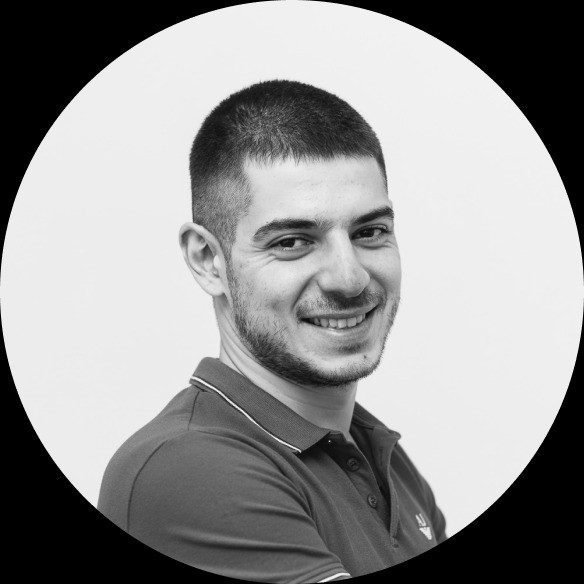

Gor Gasparyan explains how Passionates replaced traditional agency uncertainty with a subscription model that gives ambitious brands dependable access to senior creative specialists. The interview explores relationship building through consistency; fast delivery; and becoming an extension of each client’s team. It offers a practical view of how recurring partnerships can strengthen trust.
I am Gor Gasparyan, the Co-Founder and CEO, and my journey began with a strong analytical focus, studying Economics at the University of Warwick before translating that strategic mindset into the digital creative space. I understood early that design should not simply be beautiful, but it must be meticulously engineered for measurable business outcomes, so my mission became building a new kind of agency.
Company: Passionate Design Agency
We are thrilled to have you join us today, welcome to ValiantCEO Magazine’s exclusive interview! Let’s start off with a little introduction. Tell our readers a bit about yourself and your company
Gor Gasparyan: We founded Passionates to directly challenge the slow, expensive, and inflexible traditional agency model by offering a subscription-based service that gives high-growth and enterprise brands on-demand access to our senior specialists. Instead of paying project fees or hourly rates that spiral, clients receive unlimited requests for everything from UI/UX design and Shopify development to conversion optimization and AI-driven automation for a predictable monthly cost, giving them financial clarity. We achieve rapid delivery and high standards by only employing the top 0.5% of talent across our core services, ensuring that the work is not only premium quality but also delivered fast, with turnarounds often completed within one to three working days.
What was the defining moment or challenge that prompted you to pivot your business model, and how did you recognize it was time for a change?
Gor Gasparyan: The defining moment that forced Passionates to pivot came when I clearly saw the financial instability created by the traditional project-based model. When we started, we were operating like a typical bespoke design and development studio, quoting high fixed fees for websites and branding packages. This model created a volatile cash flow because we were always chasing the next big contract, and our revenue could fluctuate by 30 percent or more from one month to the next. I recognized it was time for a drastic change because our revenue was entirely dependent on winning large, one-off sales cycles, which did not align with the long-term, iterative needs of the ambitious brands we wanted to serve. The only way to provide our high-level expertise with both predictability and flexibility was to completely move away from the old agency structure and embrace a high-value subscription service model.
Can you walk us through the most significant change you made to your business model and the immediate impact it had on your company’s trajectory?
Gor Gasparyan: The most significant change I made to our business model was entirely abandoning the project-based structure and shifting to a premium, unlimited subscription model for all our creative and strategic services.
I recognized that the traditional model was inherently flawed for continuous growth, so I redesigned Passionates around the concept of a predictable, on-demand resource. Instead of selling a website build for a fixed price, we began selling monthly access to a dedicated senior resource who could fluidly switch between services like UI/UX design, Webflow development, CRO, and AI automation. This move transformed us from a vendor that delivered finite projects into an integrated extension of the client’s internal team, providing ongoing support for unlimited requests.
The immediate impact on our trajectory was dramatic, and it solved our previous issues with revenue volatility. Within the first year of the full pivot, our Monthly Recurring Revenue (MRR) stabilized because our client churn dropped significantly, giving us a far more reliable financial footing. Furthermore, the commitment to a subscription model enabled us to be extremely selective with talent; we only hire the top 0.5 percent of specialists globally because we are now incentivized to deliver continuous, high-quality output to retain the client. This focus on premium talent, in turn, allowed us to secure higher-value enterprise contracts, ultimately resulting in a 300 percent increase in average client lifetime value compared to our old project-based work.
How did you convince your team, investors, or stakeholders to embrace such a dramatic shift, especially if it involved risk or uncertainty?
Gor Gasparyan: I decided to prioritize convincing the team first, because their belief and execution were absolutely essential for the new model to succeed. I knew that without the unwavering commitment of our senior specialists and project managers, the entire subscription concept would fail.
I did not try to convince them with abstract vision; instead, I used measurable data and focused on solving their biggest daily frustrations. I presented financial models showing that the old project-based work led to an unsustainable amount of unpaid scope creep and unpredictable workloads, which often forced them to work extra hours for no additional compensation. The pivot to a flat-fee, unlimited subscription offered them greater stability and work-life balance because it eliminated the constant, frustrating negotiation over minor requests, making their professional lives calmer. Moreover, I explained that by focusing on recurring revenue from ambitious enterprise clients, we could offer them above-market compensation and better benefits, thereby directly tying their individual financial security to the business model’s new structure. By showing them how the subscription model created a healthier, more profitable, and less stressful environment for their high-level talent, I secured their buy-in with 100 percent certainty.
What was the biggest obstacle you faced during the pivot, and how did you overcome it to ensure the new model’s success?
Gor Gasparyan: The biggest obstacle during the pivot was the challenge of re-educating the market and convincing prospects that a high-end, unlimited subscription model could deliver better results than traditional project work. Our customers were culturally conditioned to the old agency billing structure, so they were highly skeptical of paying a flat fee for “unlimited” services.
First, I fundamentally changed our sales conversation to focus only on quantifiable outcomes rather than hours or deliverables. Instead of discussing the cost of a logo, we discussed the projected increase in conversion rate that our CRO expert could achieve. I used our Economics background to build a simple return-on-investment calculator that showed prospects exactly how much revenue a 15 percent lift in funnel optimization would generate, making our subscription fee—even at the premium level—look like a negligible business expense.
Second, I reinforced our commitment to quality by rigidly adhering to the “top 0.5 percent talent” rule, which I had previously implemented. I understood that if we ever failed on a single request, the client’s faith in the unlimited model would instantly collapse. We backed this commitment with a guarantee of 1-3 day turnaround times and dedicated project managers who maintained quality control, ensuring the client’s experience was flawless. This consistency provided the trust needed for clients to embrace the predictability and scalability of the subscription model over the old, unreliable project scope.
Looking back, what’s one key lesson from your pivot experience that you’d share with other CEOs considering a major business model shift?
Gor Gasparyan: If I had to boil down the entire experience of pivoting Passionates to a subscription model into just one piece of advice, it would be to start by defining the non-negotiable metric of success for your new model. Do not just focus on a new revenue stream; focus on the single metric that validates your entire existence.
For us, the non-negotiable metric was Client Lifetime Value (CLV) to Client Acquisition Cost (CAC) ratio. I determined that our subscription model had to deliver a CLV that was at least 3.0 times our CAC, which is a common benchmark for sustainable SaaS growth. Everything we did during the pivot—from hiring only the top 0.5 percent of senior talent to promising 1-3 day turnaround times—was a direct investment in extending that CLV and proving the financial viability of our expensive subscription tier. By establishing that rigorous financial target first, the necessary operational changes became clear and non-negotiable, eliminating the risk of reverting to the old, unstable project model.