
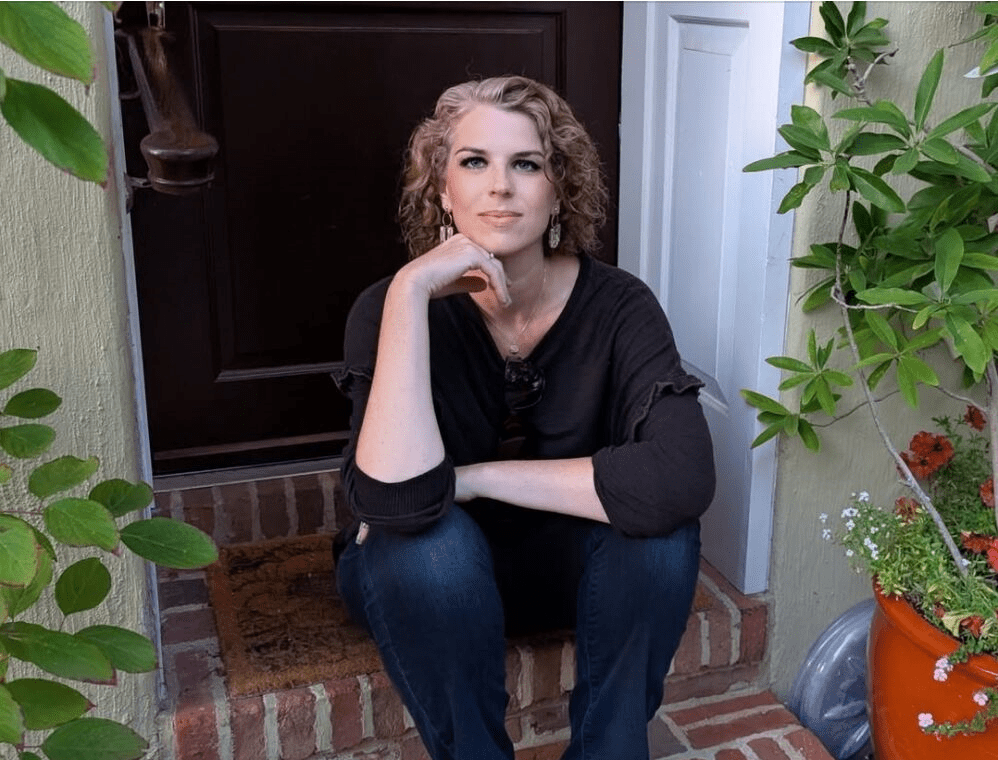
Full original interview → https://valiantceo.com/dr-elizabeth-dubois/
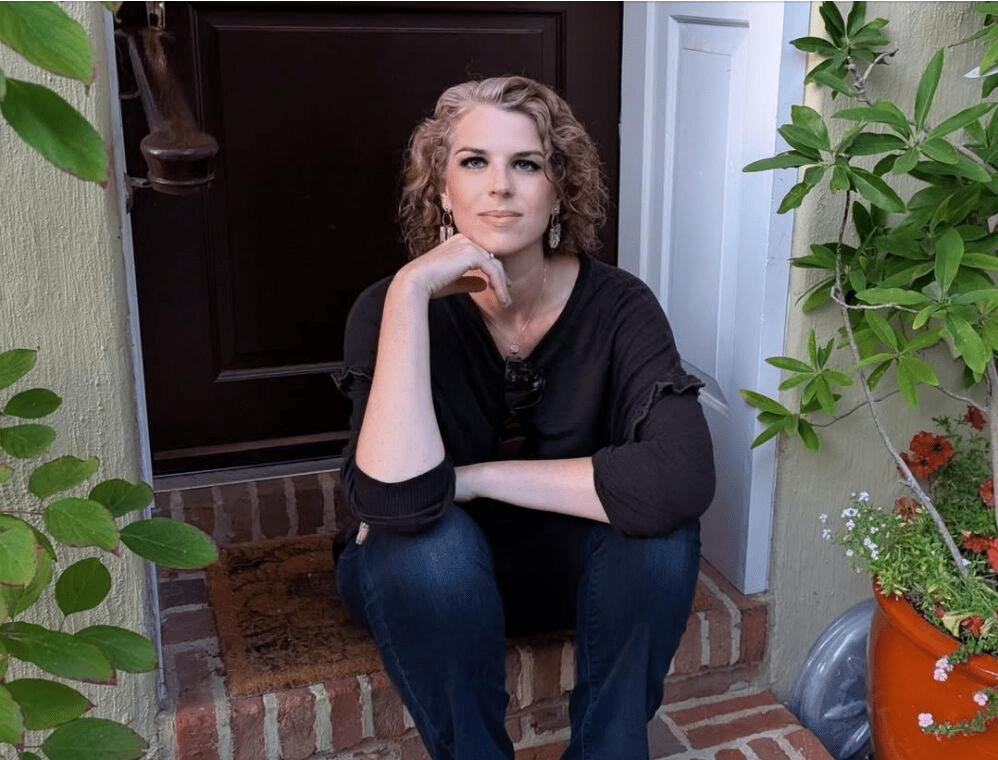
“Dr. Elizabeth DuBois connects confident leadership with daily visibility; intentional networking; and self trust. Her advice for women business owners is practical and direct: act like a CEO; track the numbers; ask for sales; and build relationships through communities such as chambers and Rotary.”
Elizabeth Degi DuBois (PhD, Conflict Resolution, MA, Sociology, Certified Divorce Coach) is an executive coach and couples’ conflict resolution coach who specializes in working with women business owners. Through one-on-one coaching, group courses, organizational consulting, and public speaking, Dr. DuBois helps clients ditch people pleasing and overthink, get in touch with the version of themselves they were before societal BS programming got stuffed down their throats, & lead their organizations from a place of unapologetic power, deeply grounded in unconditional self-acceptance and joy. Learn more at: https://drlizdubois.com/
Before becoming a coach and conflict expert, you worked at iconic companies like Walt Disney World and iHeart Radio: what lessons from those early roles still influence your approach to leadership and client care today?
Elizabeth Degi DuBois: The big overarching lesson I learned from both of those companies is that the tone you set for what people can expect from you 100% dictates the way people do business with you.
At Disney, guests are treated like royalty. The company knows that people are willing to drop thousands and thousands of dollars to go there because they’ve set the tone for what people can expect: an experience that’s absolutely above and beyond what any other family-themed resort is going to do. The dining, the theming, the way cast members treat you, the little touches here and there — all of that leads to people being not just happy to pay high rates, but eager to do so. They want the feeling of being treated in ways that take them out of the ordinary, make them feel special, and make them feel like they’re part of something magical.
By contrast, Clear Channel — which has since become iHeartRadio — treated their employees as disposable. It was a stark market shift during my time there. The general manager when I started cared about people; he went to their kids’ christenings and weddings and was friendly and warm. He set the tone for a company that was inclusive — not in the DEI sense, but in the sense that everyone felt like they had a place there, that they mattered to the company’s overall mission.
When that leadership changed, and commission rates dropped overnight from 20% to a small fraction of that, people felt alienated and unimportant. The new leadership set the tone that people leaving was just normal. It went from being a company where, if someone was transitioning out, there would be an email to everyone wishing them well in their future endeavors — to a place where people left so often that those emails stopped altogether.
I don’t know if that was because so many people were leaving that the company felt embarrassed to acknowledge it, or because they genuinely didn’t give a shit. Regardless, the tone that leadership set was that individual contributors didn’t matter — that profit was the only focus — and that people’s basic needs were an inconvenience rather than something to be respected or celebrated.
Companies that stick around for decades, sometimes even centuries, fundamentally set the tone for being the kind of places people want to do business with, literally and figuratively. They become icons for what it means to be leaders in their industries, and extremely appealing for individuals to invest in — whether that’s spending thousands on a few nights’ vacation, moving their money into a heritage brand, or anything in between.
The tone you set for how people can expect you to treat them dictates whether you stay in business long-term — and whether the business you do day-to-day is enjoyable, meaningful, and ethical.
Your work blends soul-centered executive coaching with trauma-informed leadership and a focus on ADHD entrepreneurs. How do you define transformation for your clients?
Elizabeth Degi DuBois: The big shift I’m always shooting for with each of my clients is to bring them from being a person who wants to have a successful business to becoming the kind of person who can actually lead one.
I think a lot of coaches approach their work from a strategy standpoint, “How do I give people tools?” For me, it’s, “How do I help them become someone different?”
Think about it this way: if you were six feet tall, you’d never struggle to reach the top of the fridge to grab your favorite snack. But if you’re four feet tall, you’d never think it was possible to get there in the first place.
Most business coaches help the “4-foot person” pull up a stool and climb to the top — to where they want to be, success-wise. But the faster, more sustainable, and actually lasting way to get there is to help that person grow into someone tall enough to reach that level naturally.
If you don’t grow your confidence, your intelligence, your awareness of how to take effective action, your ability to be decisive and trust yourself, then all the strategies in the world won’t stick.
The difference between an aspiring business owner and a sustainable one is that they grow into a belief system and set of behaviors that enables them to be successful over and over and over again. They become someone who thrives, feels good, has fun, makes money, and is still in business ten years from now, not just performing success in fits and spurts until burnout takes over, or until the consequences of short-sighted decision-making tear them down.
What does it mean for entrepreneurs to grow their small business into a big deal?
Elizabeth Degi DuBois: First and foremost, it’s important to define what small means here. In my eyes, small means you’re not interested in growing past a certain point that would require you to turn the business into something that feels inauthentic to your values or takes you away from doing what you love.
For instance, maybe you see your craft quilting company as something that lets you travel to all the state fairs every year. You bring your grandkids along, you make beautiful quilts, you get to share your passion with your family — and it fills you up. That’s your version of a small business.
Then along comes someone who says, “We’re going to make you big time! Just sign this corporate contract, and we’ll help you expand. We’ll coach you and scale your small business into a big deal.”
Next thing you know, you’re sitting in national and international meetings, talking about fabric quality that doesn’t align with your values. You’re being told your products need to be mass-produced instead of handmade, and that going to state fairs is a waste of time because the margins aren’t as high as selling through dropshipping online.
All of a sudden, your small business — the one you loved — has turned into a brand that no longer reflects your values or why you even started in the first place.
Making your small business a big deal means you get to do what you love, on your terms, when and how you want to.
Maybe you’re an incredible coffee company like Rise Up, a great local brand that started as a little drive-through kiosk in one of the towns in my county. Now they have multiple locations across the region. They are a community gathering place, and serve really really good coffee chocolate banana oat milk smoothies, which have become absolutely essential for this lactose intolerant caffeine addict. They’ve created a brand that locals are proud of. When my family drives past their sign in another town, we go, “Oh look — it’s Rise Up!” because we feel connected to it. Even though they keep adding locations and bigger spaces, the way they’re expanding doesn’t feel out of touch with small business, upstart roots.
Being a big deal means you’re not constantly grinding for the next sale or worrying about where your next dollar is coming from, or what some mean girl from high school might say about you on the internet, or sacrificing your time with your kids to keep hustling.
Growing your company into a big deal feels like you are doing exactly what you were put on this earth to do, and that you’re making a damn good living doing it.
You’ve worked with women scaling businesses to seven figures and rising into leadership positions. What patterns do you see in women stepping into their power?
Elizabeth Degi DuBois: The biggest thing that tells me if a woman is going to tip into that category comes down to internal permission.
By that I mean most women feel like they have to have buy-in and approval from the most important people in their life — maybe that’s their husband, or their mom, or their church, or their best friend, or their banker — they think that unless these people say, “That’s a great idea,” then they shouldn’t do it.
They think that others’ assessment of a situation is more valid than their own, and until they get that buy-in, they are not going to move forward.
I vividly remember being in a business conference in November 2019 when I realized so clearly that I had been doing exactly this. I had been dreaming of having a podcast for literally years, and had every capacity to pull it off but hadn’t even gotten started.
I was standing in this sports arena with 6,200 other women who own businesses, and the man on stage said, “No one is going to give you permission to go for your dreams — you have to give yourself that permission.” Then, in this kind of tongue-in-cheek way, he said, “But just in case you do need that permission, consider this your permission slip.”
I took that and I ran with it — I actually wrote it into the outro of my podcast. I felt such an aha lightbulb moment, realizing I had been waiting for somebody else to bless my idea and be like, “Oh no, that sounds fine, you should do that!” As grown-ups, nobody’s ever going to be like, “Oh, you’re allowed to do that.”
For a lot of women, we are socialized to feel like if we start to do the thing we want to do, it’s going to inconvenience others, or that we’re not going to be able to pull it off without taking time away from other people. In business, that’s just the cold reality. Your dreams will take time from your other obligations, and pretending like that’s not going to inconvenience or piss someone off is a gauzy dream world — not a laundry-and-soccer-practice-after-school world.
You have to have enough of a backbone to tell people — not ask them — that you’re going to go for it, and then not back down when someone tells you it’s an inconvenience for them.
You’ve said before that many of your clients come to you after years of “doing all the right things.” What helps them finally break free from that perfectionism?
Elizabeth Degi DuBois: Honestly? Exhaustion.
Most of my clients have been chasing gold stars their entire lives — grades, promotions, approval. They get addicted to the high of other people celebrating them, and then that tips into this corrosive cycle of needing validation from others and taking on more and more unmanageable tasks to get that approval.
This can look a lot like overperforming in their business at the expense of mental health and time with loved ones, selling products that are high-pressure and maybe not even what someone is really passionate about, and taking on clients who are demanding and have poor boundaries.
When someone finally hits a wall and has enough pain, to co-opt a phrase from addiction recovery lingo, they seek change. The tools I use to help people out of this cycle come down to helping my clients see the pattern clearly, often for the first time, and then supporting them through the process of becoming someone with strong enough self-worth to demand better for themselves in their business and beyond.
You’ve mentioned that neurodiversity is often overlooked in leadership development. How can we better honor different cognitive and emotional styles in executive spaces?
Elizabeth Degi DuBois: Start by assuming difference is the norm, not the exception. Leadership programs love to preach inclusion but still design everything for linear thinkers with steady dopamine. But look around — are the systems and structures we have now really the kind that will lead to more peace, understanding, friendship, sustainable food sources, housing, health care, etc.? No? Okay, then let’s start to really listen to voices that bring a different perspective.
Neurodivergent leaders often have these wild, brilliant ways of connecting dots, but then they try to harness it into boxes built by systems that pathologize and mock how their brains work. Fuck that. If you fall into this category, as I do, know that your way of seeing the world is the disruptive perspective that can transform everything.
What advice would you give to neurodivergent leaders, especially those masking or managing anxiety, who are trying to lead, heal, and thrive without burning out?
Elizabeth Degi DuBois: Business leaders on the spectrum, or living with ADHD, bipolar, and/or addiction challenges especially, need to stop chasing the myth of “normal.” Build the kind of business that amplifies your natural brilliance instead of managing it in ways that undermine your well-being and your self-worth.
Surround yourself with people who don’t stigmatize your differences. Find support groups, online or otherwise, where you can be surrounded by people who reflect back to you how brilliantly weird you are. Literally, actually cut people out of your life who see you as disabled or broken — you genuinely do not need that kind of stigmatizing, pathologizing energy in your life.
You are not broken, and honestly, you’re not even that different. So many high performers are running amazing organizations and managing brains that operate outside the “norm” we see reflected in broader social narratives. We aren’t yet at a place where society is really honest about how prevalent these differences are, but that doesn’t mean leaders like me aren’t out there fucking killing it.
If you could give one piece of advice to struggling small business owners who are playing small, what would you say?
Elizabeth Degi DuBois: Act like a CEO. Show up for life telling yourself you are one, even in the moments you don’t feel like it.
Show up daily online, even when you don’t feel like it. Ask people for a sale, every. single. day. This can be in your pitch daily on socials, or in actual pick-up-the-phone-and-call-prospects mode.
Join your local Chamber of Commerce and get looped in with the other business owners in your area. Even though most of my business comes from out of state and international, being part of the Chamber and a part of Rotary International inspires me to put on big-girl clothes and stay sharp with my elevator pitch as I meet new people.
Take simple care of your body: find a workout routine that you can stick with and move your body daily — for me this is so basic, I literally just walk around my neighborhood for 10–30 minutes, depending on how busy my morning is. Go to bed around the same time and get up around the same time. Drink water. Treat your body with at least as much care as you invest in cultivating your client roster.
Big one — track your numbers. I keep a Google Sheet of my pitches, sales, and cash received month to month. I look at this bad boy at least once a day. If my cash-received column is low, I can look at my sales-pitched column and know why.
Dress like you give a damn. When I go to a coffee date, I am in business casual. When I am at a business event, I am in a suit or dress — not because anyone would be offended if I wasn’t, but because these are the clothes that make me feel like someone else will look at me and see me the way I want to be seen.
In short, take what you do seriously. I am a complete goofball in my personal life, but when it comes to my professional life, I am a leader and show up as one. Every day. I am here to change lives, and the more I am grounded in the activities that make me feel like I am doing that, the more my business thrives.
Where can readers connect with and support you?
Elizabeth Degi DuBois: You can find me online at DrLizDubois.com or on FB at www.facebook.com/bizdrliz/. I have spaces open for one-on-one executive coaching and business growth coaching on a rolling basis. This is for executive leaders, business owners, and sales/marketing pros who want to grow their companies and wake up every day loving what they do.