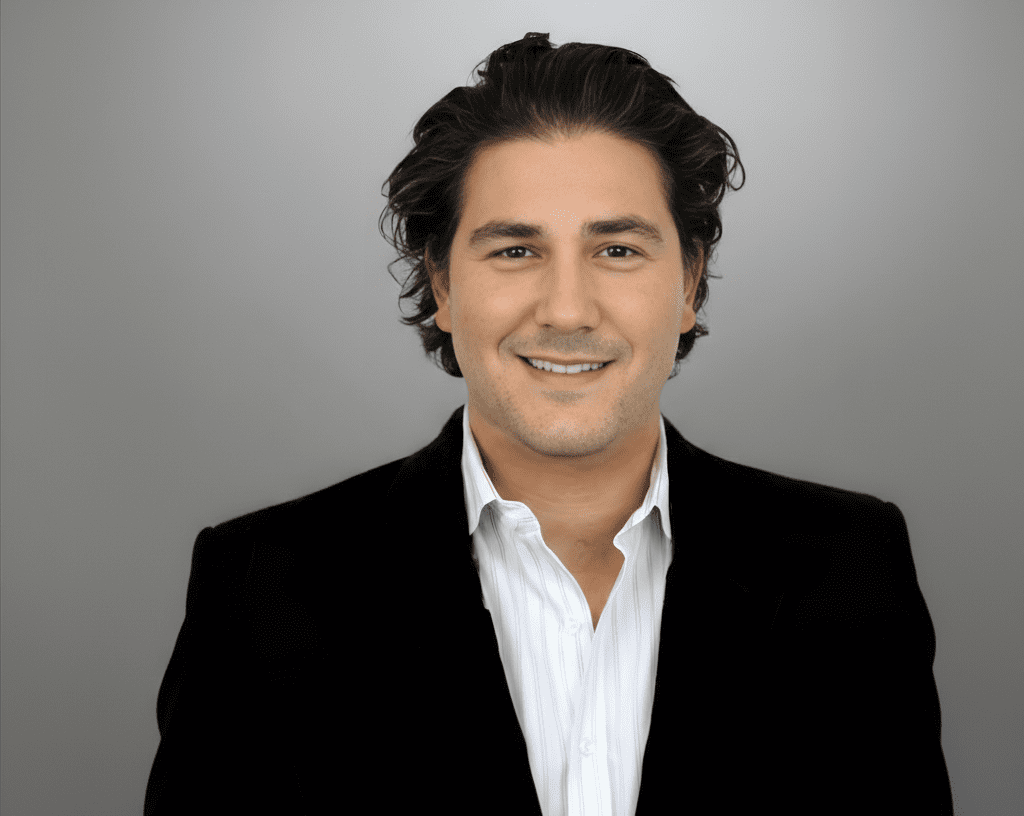

For six decades, Dr. Michael Freeman has combined invention, education, and entrepreneurship to explore how technology can make learning genuinely individual. As the creator of LEACHIM, a pioneering robot teacher widely regarded as a precursor to modern AI, he brings rare firsthand insight into adaptive instruction, responsible innovation, and the human judgment technology must never replace.
It started in Parkchester, a housing project in the Bronx, where I was the kid who constantly took things apart to see how they worked. An old radio or television in the trash was, to me, an invitation to take it home for a postmortem. My parents were convinced I would electrocute myself well before my teenage years ended. But I was learning each time I performed a dissection.
One early project almost ended my career before it began. Our seven-story building had one elevator and I lived on the fourth floor. I decided it would be more convenient if the elevator returned to my floor when nobody was using it, so I rewired it to do exactly that, and installed my own call button inside our apartment so I could summon it before putting on my coat. Some of the work required getting into the elevator shaft late at night, which I strongly recommend nobody imitate. The system worked beautifully for about a year, until my father discovered it. He was convinced I was going to commit unintentional elevator homicide and ordered me to remove the whole thing. I did.
For the doubting Thomases, I offer a challenge. I will put $50,000 toward the charity of your choice if an independent engineer inspects the shaft and certifies there is no clear evidence of wire tampering or unauthorized wiring remnants on the fourth floor. If the engineer documents clear evidence of my shaft incursion, I win, and you put the same amount into my favorite charity. Any takers?
In the 1970s I built Leachim, a robot teacher that is now generally considered a precursor to today’s AI. It was an advanced application of diphone synthesis, the technology that first allowed computer output to talk. Leachim addressed students by name, stored information about them, tracked their progress, adjusted the level and sequence of instruction, remembered personal interests that made the interaction more engaging, and could work with several students at once through headsets. By today’s standards the hardware was primitive. The idea was not.
Afterward I created and voiced the 2-XL Robot, which is often considered the first smart toy. From there the work spread across robotics, digital speech, telecommunications, interactive media, laser technologies and advertising. Forty of my patents were commercialized and I contributed to approximately twenty-five others.
But the honest answer to what I do is narrower than that list suggests. I have spent my whole career on one problem, which is individualization.
If one teacher could be in thirty intellectual places at once, I might never have invented Leachim. Even a superb teacher cannot simultaneously give thirty students thirty different lessons, each moving at exactly the right pace. Every child has a different level of comprehension, different strengths, different speeds and different difficulties. One student is bored because the class is too slow. Another is lost because it is too fast. That was the problem in the 1970s and it has not gone anywhere. What has changed is that we finally have tools equal to it.
My interest in it is not academic. I was what people then called a blue baby. The delivery took too long, I was deprived of oxygen, and once the doctors got me breathing they ran the tests available at the time and told my mother I had suffered brain damage and might never be normal. When I started school that diagnosis looked disturbingly accurate. I could not keep up. By third grade I still could not read, and my mother took me by subway several times a week to a special reading clinic. To this day I read slowly and do not particularly enjoy it. I also could not tie my shoelaces, which everyone took as further confirmation that something was wrong with me. Years later, in the Coast Guard Reserve, I learned complex knotting and loved it. Today my children and grandchildren are amazed at what I can do with a length of rope.
That saga taught me the thing I have built my career on: being pathetic at one kind of task tells you remarkably little about what a brain may be capable of somewhere else. Which is precisely the argument for individualized instruction, and precisely what a classroom running on averages cannot deliver.
It accumulates through things that actually work in the hands of strangers.
I have been granted patents across robotics, digital speech, telecommunications, interactive media, laser technology and advertising. Forty of them were commercialized, and I contributed to approximately twenty-five others. That second word is the one that counts. A patent by itself proves only that you had an idea and filled out the paperwork. A commercialized patent proves that somebody looked at your idea, put their own capital behind it, manufactured it, and sold it to people who had the option of not buying it. The market is completely uninterested in how clever you are. It wants to know whether the thing still works after a seven-year-old drops it down the stairs.
The second piece is honesty, and I mean the practical kind rather than the inspirational kind. People are generally much better at detecting dishonesty than dishonest people imagine. In business, in invention, and in life, the person who thinks he is fooling everyone is very often fooling nobody. I could spot those people from a mile away, and so can the people you are trying to build a reputation with. Over a long enough career, you are not remembered for your best idea. You are remembered for whether your word was good.
The third piece is being someone people are willing to be in a room with. Be honest, work hard, and be pleasant. I have told my college students many times that business is the logical and unemotional pursuit of profit. Raising your voice to your boss even once can end a career on the spot. Talent gets you in the door; temperament decides whether you are invited back. There are people walking around with IQs of 150 who are sitting alone and penniless, and it is almost never the intelligence that failed them.
And the fourth piece, which took me longest to learn: know your audience. Excellent circuitry can still use a good introduction. I will tell that story properly further down, but the short version is that the most brilliant thing you ever build will be ignored if you present it in a form nobody wants to walk up to. Authority is not only a matter of being right. It is a matter of being received.
If I compressed all of it into one line: build things that work, tell people the truth, be someone worth working with, and let the record accumulate. That takes decades, which is exactly why it cannot be faked.
“Start with a human problem, not with a technology looking for employment.”
— Dr. Michael Freeman, LEACHIM and Astolat