
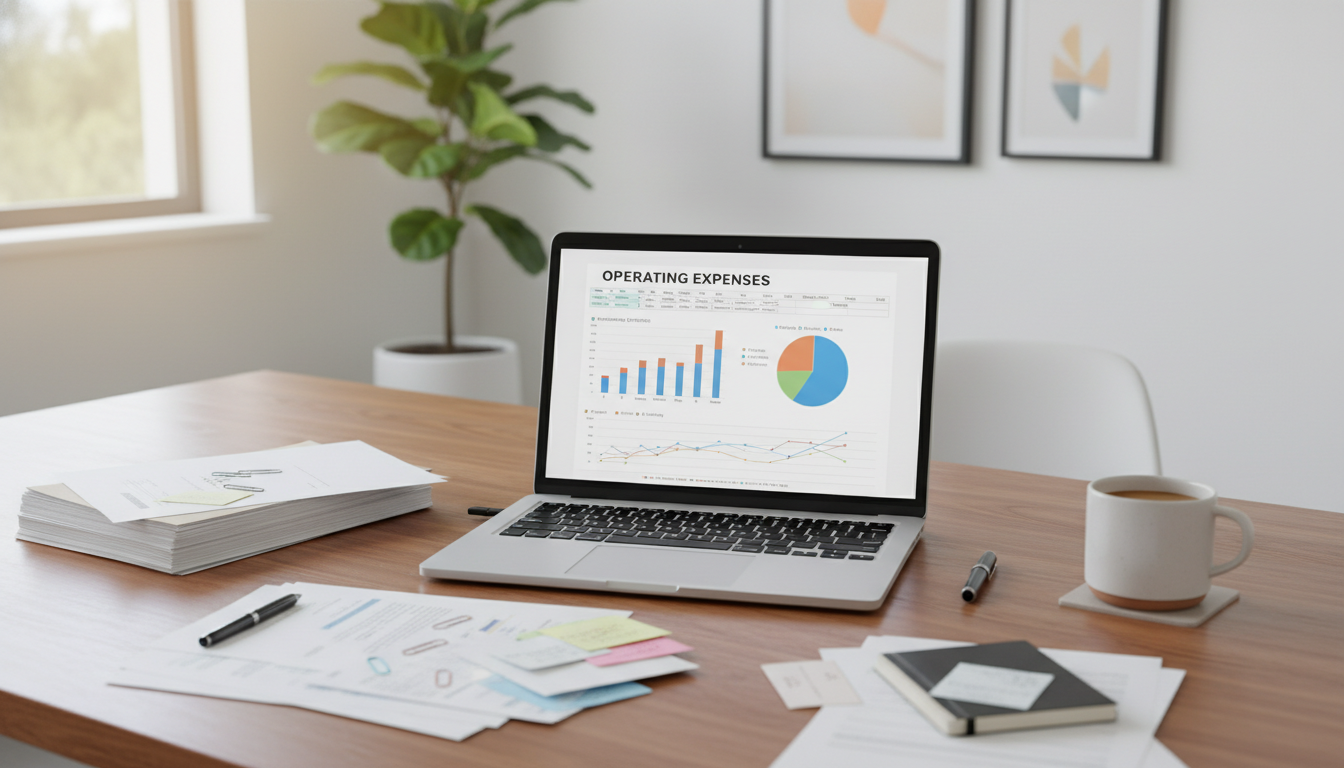
Running a company well starts with clear spending habits. This guide gives an easy, practical operating expenses list and shows how to track, categorize, and manage day-to-day costs without drowning in accounting terms.
Put simply, these are the ongoing costs that keep a business moving — rent, payroll, marketing, software, and more. Accurate tracking helps you make smarter choices, tighten budgets, and boost profit.
You will learn how to tell the difference between regular costs and non-regular items, where each item appears on an income statement, and how to avoid mixing up COGS and capital purchases. The tax angle matters: many costs are deductible if they are ordinary and necessary, so neat categories simplify taxes and audits.
Expect plain examples across industries, quick “what to include” checklists, and simple ways to use OpEx as a percent of revenue. Treat this as a living reference you can review monthly to protect cash flow and keep quality while you invest in growth.
Key Takeaways
- Track ongoing costs consistently to improve financial clarity.
- Use clear categories to simplify tax time and audits.
- Avoid misclassifying COGS and capital purchases.
- Measure OpEx as a share of revenue to spot trends.
- Review this checklist monthly to protect cash flow and support growth.
What operating expenses are and why they matter for day-to-day operations
Day-to-day spending keeps the business engine running; knowing which costs are routine helps you plan cash and protect margins.
Definition: Operating expenses are the recurring costs of running your core activities—payroll, rent, utilities, and tools used to deliver goods services.
How these costs support revenue-generating work
You rarely sell payroll or rent, yet those items make sales possible. Staff, systems, and space enable production and customer service.
How they affect income and cash
High-level math: revenue minus COGS equals gross profit. Gross profit minus these costs yields operating income. That figure then flows into net income after interest and tax.
Even small recurring bills can erode cash flow if not tracked. Regular payments matter for budgeting and short-term liquidity.
Why “ordinary and necessary” matters for US businesses
The IRS lets firms deduct costs that are ordinary (common in the trade) and necessary (helpful for profit). Good documentation and correct classification affect taxable income and audits.
Note: what counts can vary by industry. When these costs grow faster than revenue, profit and flexibility shrink—so watch the trend and align categories with how your operations really run.
Operating vs. non-operating expenses: the key differences investors and accountants care about
Investors and accountants separate routine company costs from one-off charges so they can see true core performance.
Why the split matters: Separating operating expenses from non-operating items lets analysts judge how efficient daily activity is without financing or one-time noise. That clarity helps measure predictable profit and cash generation.
What counts as core costs: Daily items tied to delivering goods or services—payroll, rent, utilities, marketing, admin tools, and routine repairs—belong in the main operating bucket.
What sits outside core results: Non-operating expenses include interest charges, litigation settlements, restructuring, exchange losses, and one-time losses from asset sales or disasters.
- Frequent large non-operating items lower predictability and can hurt debt ratios.
- If a cost would persist while you paused selling for a week (for example, interest), it often falls outside core results.
- Classify consistently month to month so leadership sees real trends.
| Category | Core examples | Investor impact |
|---|---|---|
| Routine costs | Payroll, rent, utilities | Shows operational efficiency and recurring margin |
| Non-core items | Interest, litigation, one-time losses | Can skew earnings and reduce predictability |
| Practical rule | Costs that remain when sales stop | Often classified outside operating income |
For a useful primer on the accounting split, see this guide to operating vs. non-operating expenses.
Where operating expenses show up on an income statement
The statement’s middle section—below gross profit—summarizes the recurring costs that shape operating margin.
Placement after gross profit and how they reduce operating profit
First come revenue and COGS, then gross profit. Directly beneath gross profit you find the main expense groups that reduce operating income.
Why this matters: the figure shown after these deductions is the operating profit, a clean measure for comparing companies.
Common groupings on the statement
Typical line items include SG&A, depreciation and amortization, and other items tied to day-to-day activity.
Depreciation may appear as its own line or be included inside SG&A depending on how a company reports. That choice changes where non-cash charges for assets show up.
Practical tips for clearer reporting
- Map your chart of accounts to the standard sequence so monthly reports match quarter to quarter.
- Watch the gap: strong gross profit but weak operating income often signals overhead or scaling inefficiencies.
- Keep non-operating items like interest and taxes below operating income so readers can judge core performance.
Operating expenses list: core categories every business should track
Start with a master chart so each bill has a clear category in your accounting. A tidy roster helps owners, bookkeepers, and managers spot trends and make budget moves fast.
- Payroll: base pay, overtime, commissions, bonuses, employer payroll taxes, and benefits like health and retirement.
- Rent and occupancy: lease payments, common area maintenance, and facility upkeep that keep space usable.
- Utilities: electricity, water, internet, and phone—predictable but worth monitoring for creep.
- Office supplies and admin: supplies, small equipment under capitalization thresholds, postage, and general admin purchases.
- Software and tools: licenses and subscriptions for project management, accounting, HR, security, and communication tools.
- Marketing and advertising: campaign spend, creative production, and sales support tracked by channel for ROI.
- Professional services, insurance, and bank fees: accounting, legal, insurance premiums, merchant and payment fees.
- Depreciation and amortization: non-cash items that still affect profit and reporting accuracy.
- Fulfillment: shipping, delivery, storage, and handling—may be OpEx or COGS depending on your model.
- Training and development: courses, certifications, and enablement that reduce errors and boost productivity.
Tip: Copy this catalog into your chart of accounts or budgeting spreadsheet and review monthly to prevent small leaks from turning into larger problems.
Personnel costs that often drive the biggest operating expense line items
Headcount choices, overtime rules, and benefits design directly shape a company’s monthly burn rate.
Salary and wage structure, including overtime and staffing levels
Base pay, overtime, and staffing pace often make the largest payroll-related cost for any business.
Track salaries and wages by role and department so management can spot overtime patterns and true cost per hire.
Benefits, payroll taxes, and payroll processing costs
Include employer retirement contributions, health benefits, and payroll taxes when you calculate the fully loaded cost of an employee.
Also budget for payroll software or provider fees and bank payments so these hidden items don’t surprise cash flow.
Travel, meals, and entertainment policies that keep spending predictable
Set clear per-diem rules, approval workflows, and documentation standards for travel and meals to control spending and support compliance.
- Use hiring approvals and defined overtime authorization to limit sudden payroll jumps.
- Split personnel costs by function—sales, operations, marketing, admin—to measure efficiency vs. output.
- Review compensation periodically to align pay with performance and market reality.
Why it matters: consistent categorization and simple controls make forecasting easier and prevent payroll-heavy months from hurting liquidity.
Occupancy and utilities: rent, maintenance, and hidden facilities costs
Occupancy charges often hide more than a monthly rent bill; they include utilities, vendor services, taxes, and small upkeep items that influence cash flow.
Rent vs. leases and what to capture monthly
Rent is the recurring payment for space. A lease may add common-area charges, insurance, or property taxes. Capture the base payment and any monthly add-ons so your accounting shows the true cost of your office.
Maintenance, repairs, cleaning, and security
Facilities costs include repairs, cleaning services, security monitoring, waste removal, and small supplies for upkeep.
- Track vendor invoices separately to spot price creep.
- Log one-off repairs to avoid hiding recurring needs.
Cost levers that won’t harm daily operations
Consider remote work, shared coworking for small teams, or right-sizing square footage to match headcount and workflow.
At renewal, renegotiate rent, compare vendors for cleaning and internet, and request service bids to trim recurring costs. Controlling occupancy before signing or renewing is the most effective time to cut major fixed costs.
Administrative and office spending: the quiet budget-drainers
Small admin buys add up fast — a few pens or a monthly app can quietly swell your overhead.
Why it matters: These purchases feel minor but repeat across teams and months. Tracking them stops steady leakage from cash flow.
Office supplies, printing, and small equipment
What belongs here: office supplies, printing, postage, and small equipment that fall below capitalization thresholds. Keep receipts and assign each purchase to a department.
Volume turns cheap supplies into measurable costs. Standardize preferred vendors to cut unit prices and reduce one-off buying.
Software subscriptions, domains, and IT services
Subscription creep is real. Multiple overlapping software plans and idle seats raise monthly spending without adding value.
Audit domains, renewals, and support services. Cancel unused seats, consolidate tools, and negotiate enterprise pricing when possible.
Bank charges, merchant fees, and recurring service charges
Bank fees and merchant payments reduce margins on every sale. Review payment processor fees and recurring vendor fees like any contract.
Ask for volume discounts and compare providers annually to lower these steady charges.
- Run monthly vendor and subscription audits.
- Require purchase approvals for new tools.
- Use preferred vendor lists for supplies and services.
| Item | Monthly risk | Quick control |
|---|---|---|
| Office supplies | High volume; recurring small charges | Preferred vendors; departmental budgets |
| Software subscriptions | Seat creep; overlapping tools | Quarterly audit; consolidate licenses |
| Bank & merchant fees | Percent of sales; hidden charges | Negotiate rates; review processors annually |
Bottom line: Treat admin spending like any other expense. Clean categories and simple controls help finance see which departments drive costs and where standardization will save the business money.
Marketing and advertising costs that support growth without wrecking margins
Track spending by channel so you can prove which marketing actions drive sales and revenue.
Include paid media, creative production, freelancers, agency retainers, marketing tools, and sales support materials as part of your marketing budget. Keep invoices and campaign tags so you can map costs to leads.
Optimizing mix: traditional vs. digital channels
Traditional channels like TV and billboards can build brand fast but cost more and are hard to measure. Digital channels — search, social, and email — often give tighter targeting and clearer payback windows.
Practical optimization ideas
- Test small budgets, pause poor performers fast, and refresh creative to avoid fatigue.
- Track by campaign, not one big bucket, to link spending to pipeline and revenue outcomes.
- Use margins and payback periods to balance brand-building with performance marketing.
| Area | What to track | Quick KPI |
|---|---|---|
| Paid media | Ad spend by channel and campaign | ROAS, CAC |
| Creative & production | Agency fees, freelancers, asset refresh | Conversion rate |
| Tools & services | Subscriptions and marketing tools | Marketing spend % of revenue |
Remember: the aim is not to spend less, but to spend smarter so marketing supports profit. For a practical budgeting plan, review a 90-day guide to setting priorities and pacing: marketing budget 90-day guide.
Depreciation and amortization: non-cash operating expenses you still need to manage
Depreciation and amortization spread big purchase costs over time so monthly reports reflect how assets support revenue.
Depreciation for physical items; amortization for intangibles
Depreciation applies to physical assets like equipment, vehicles, and computers. Amortization applies to intangible assets such as patents or a purchased trademark.
Why they matter for profit, tax, and reporting
These are non-cash charges but they lower reported income and affect tax calculations. Lenders and investors watch these lines to judge ongoing performance.
- Simple rule: spread the cost of a capital investment across its useful life.
- Keep an accurate asset register and depreciation schedule to avoid year-end surprises.
- Depending on reporting, these items may be shown together or separated, but either way they reduce operating income.
- Good maintenance and lifecycle planning can lower total cost of ownership and influence future depreciation.
| Type | Examples | Financial impact |
|---|---|---|
| Depreciation | Computers, delivery vans | Reduces taxable income over years |
| Amortization | Patents, purchased software rights | Matches cost to revenue; affects profit reports |
| Controls | Asset schedules, review useful lives | Improves forecasting and lender confidence |
Operating expenses vs. COGS vs. capital expenses: avoid misclassification
Clear classification keeps financials honest. Mix-ups between COGS, overhead, and capital purchases can change gross margin, operating margin, and tax outcomes.
How COGS differs from overhead in production and selling
COGS are the direct costs tied to producing the goods or delivering the service—materials, direct labor, and production supplies that vary with volume.
Contrast that with overhead: payroll for admin, rent, and routine software fees that keep the business running but aren’t part of making each unit.
How capital purchases differ from monthly charges
Capital spending buys or upgrades long-lived assets — equipment, buildings, or major software. Those items are capitalized and depreciated over time.
By contrast, most monthly charges are deductible when paid (subject to tax rules), so they hit the current period immediately.
Practical example and rules of thumb
Example: a $10,000 espresso machine is a capital asset and might be depreciated at $2,000/year over five years. But the filters, cleaning supplies, and repairs are routine and expensed now.
- “Creates a long-term asset” → usually capital.
- “Keeps things running this month” → usually current period cost.
- Misclassification distorts margins and may trigger rework for tax filings.
Proper rules and a capitalization threshold policy save time and reduce audit risk.
| Category | Example | Timing |
|---|---|---|
| COGS | Raw materials, direct labor | Expensed as sold |
| Capital | Production equipment | Capitalized, depreciated |
| Overhead | Office rent, admin supplies | Expensed when incurred |
Tip: Document a capitalization threshold so teams classify purchases consistently and reporting stays clean for managers, lenders, and tax filings.
How to analyze operating expenses to spot inefficiencies and improve profit
Spotting where money drifts away starts with a simple ratio and monthly habit. Use clear metrics and short review cycles so trends surface before they hurt cash flow.
Track OpEx as a percent of revenue and watch trends
Measure total spend as a percent of revenue each month and chart it. A rising percent signals declining efficiency or margin pressure.
Benchmark with similar companies
Compare against peer firms using consistent categories. The split between core and non-core items makes cross-company comparisons meaningful.
Build dashboards by department
Create a simple view for sales, marketing, operations, and admin. Highlight spikes so management can investigate quickly.
Separate recurring vs. irregular costs
Flag baseline recurring costs for forecasting and isolate one-off items for approval. That improves predictability and scenario planning.
Concrete example and final guidance
Example: if software subscriptions climb 20% while headcount stays flat, expect tool sprawl or price creep and act before it compounds.
Goal: cut waste without harming quality—smart trimming protects profit while preserving service and growth.
Strategies to control and optimize operating and non-operating expenses
A focused cost-control plan should protect quality while freeing cash for growth.

Start with visibility: centralize vendor data, tag spend by department, and run a quarterly audit so you know where monthly payments and fees go.
Renegotiate and consolidate
Revisit supplier contracts and standardize vendors. Combine overlapping software and services to increase leverage and cut duplicate charges.
Automate approvals and invoice matching
Use purchase approval workflows and PO/invoice matching to reduce manual work, speed payments, and limit errors. Automation also improves audit readiness.
Benchmark and engage teams
Compare your cost profile to peers, run regular efficiency reviews, and ask frontline staff where waste occurs. Small process fixes often yield steady savings.
Manage non-operating costs
Reduce interest by refinancing high-rate debt or paying down small balances. Selling non-core assets can free cash and cut exposure to non-operating losses.
Balance short-term cuts with long-term performance; savings should not reduce service or capacity.
| Action | Impact | Quick metric |
|---|---|---|
| Contract renegotiation | Lower unit fees; better terms | Vendor spend % reduced |
| Tool consolidation | Fewer subscriptions; admin savings | Seats cancelled / year |
| Automation | Less manual labor; fewer errors | Invoice processing time |
| Debt management | Lower interest; improved cash flow | Interest % of revenue |
Conclusion
Good cost categorization turns noisy invoices into actionable management signals.
Takeaway: A clear operating expenses list and consistent categories help you read income statements, protect cash flow, and steer toward higher profit.
Keep the big distinctions front of mind: operating vs non-operating, OpEx vs COGS, and OpEx vs CapEx. Misclassification can distort income and tax outcomes.
Ready next step: pick 10–15 categories from this guide, map them to your statement, and review trends monthly to catch drift early.
For US readers, keep documentation to show items are ordinary and necessary for profit. Smart spending is not about cuts alone—it’s about choosing the right types of spending that sustain services and support growth.