
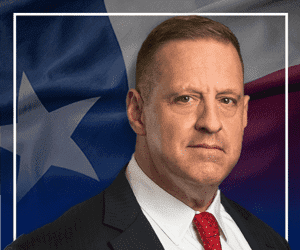

Patrick McLain shares how military service and legal experience shaped his approach to crisis leadership. From surviving a damaging marketing setback to rebuilding a thriving practice; his story emphasizes integrity; preparation; delegation; and the courage to trust capable people when pressure is highest.
Patrick J. McLain is a retired Marine Corps military judge and former federal prosecutor with over three decades of experience in criminal, federal, and military law. He began his legal career trying jury trials during Operation Desert Storm and later served as a judge in military courts. As the founder of the Law Office of Patrick J. McLain, PLLC, Attorney McLain defends clients in Texas state courts and federal courts. He also has a separate military law practice with offices nationwide from which he serves clients globally.
Company: Law Office of Patrick J. McLain, PLLC
We are thrilled to have you join us today, welcome to ValiantCEO Magazine’s exclusive interview! Let’s start off with a little introduction. Tell our readers a bit about yourself and your company.
Patrick McLain: I became an attorney midway in my twenty years’ service in the United States Marine Corps. I was a prosecutor, defense counsel, and judge in courts-martial. My first trial was the prosecution of a rape allegation; the courtroom was a tent in northeastern Saudi Arabia.
Can you share a time when your business faced a significant challenge? How did you navigate through it?
Patrick McLain: Our marketing service, one of the largest legal marketing services in the nation at the time, had violated online ethics and harmed many customers, including my law practice in 2015. We had a drastic loss of income which required surviving by loans from friends until we recovered, and thrived, from 2019 on. I then intensified my business training to become a wiser and more adept law firm owner.
How has a failure or apparent failure set you up for later success?
Patrick McLain: We have a lot of courtroom victories, but it was the few that were losses that taught me to be a better advocate and a better person.
How do you build a resilient team? What qualities do you look for in your team members?
Patrick McLain: Resilience is built on integrity, doing the right thing when you could get away with doing the wrong thing. It is built on loyalty, standing by your clients and fellow team members, even when they are struggling or not at their best. It is based on grit, knowing that pain is weakness leaving the body.
How do you maintain your personal resilience during tough times?
Patrick McLain: You have to reset, challenge yourself, and constantly think about improving. If you are not growing, you are dying. I spend at least 150 hours per year training in my profession, I work out every day, and try to remember that without proper rest and diet, I am doing a disservice to those whom I am called to serve.
What strategies do you use to manage stress and maintain focus during a crisis?
Patrick McLain: Leaders have to delegate. You cannot do it all. You have to trust your team to take on tasks of importance and concentrate on the few critical tasks that are both your skill set and key to success.
How do you communicate with your team during a crisis?
Patrick McLain: Your team has to have regular meetings. If you only meet when things are bad, that is not good for teamwork or morale. The way to have good communication is by the habit of meeting and discussing, every day briefly, every week formally.
What advice would you give to other CEOs on building resilience in their organizations?
Patrick McLain: Know what motivates your team members. Put them in positions that play to their strengths and ameliorate their weaknesses. Have the courage to listen more than you talk.
How do you prepare your business for potential future crises?
Patrick McLain: Every organization needs formal, written plans, policies, and procedures. It is a compliment, not plagiarism to borrow those from organizations similar to your own. No war plan survives first contact with the enemy, but your plan does give you the structure to adapt to new challenges and situations.
What’s the most important lesson you’ve learned about leadership in times of crisis?
Patrick McLain: People have a lot more ability and character than you might apprehend, if you but trust them.